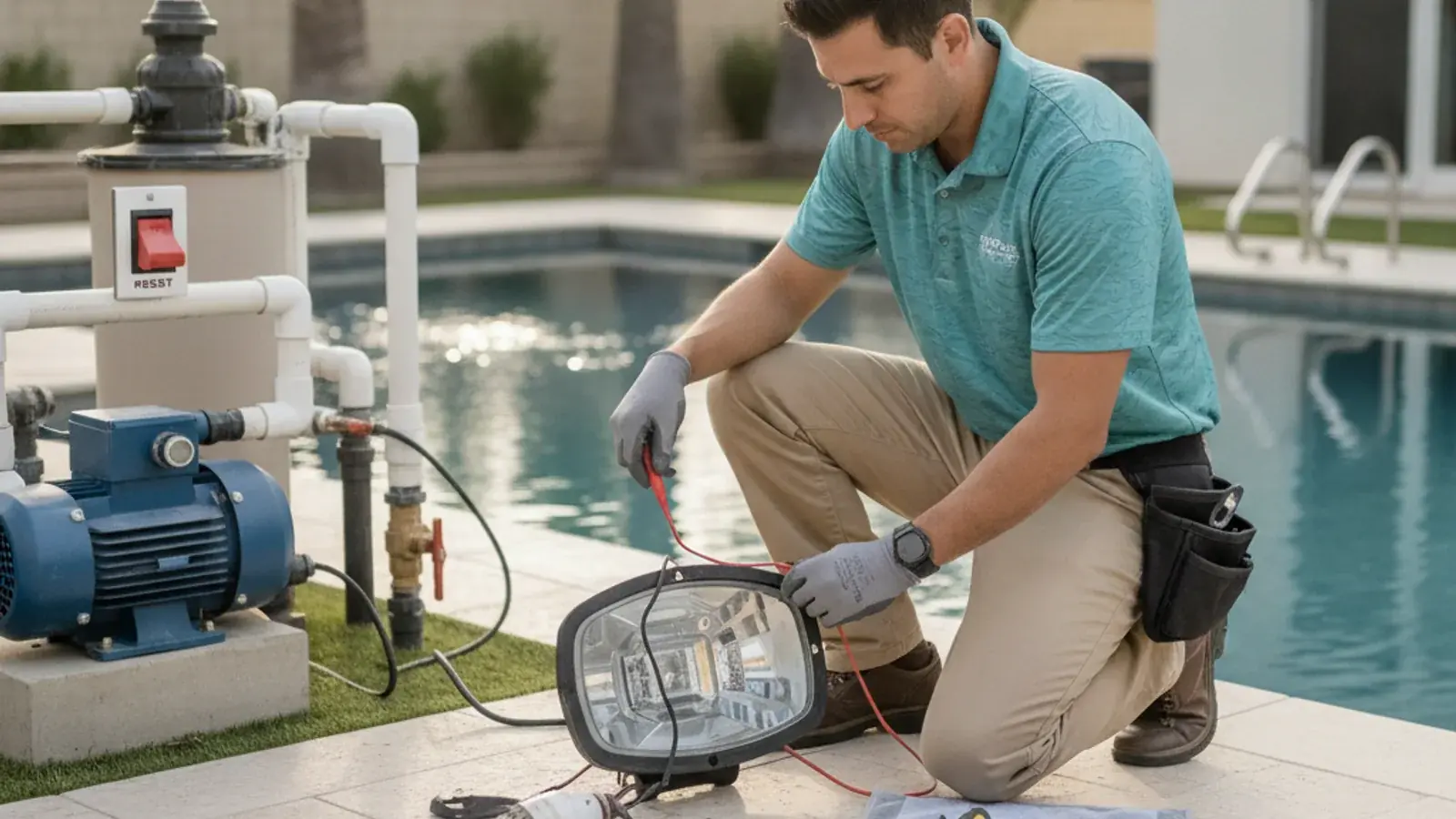
A dark pool light in San Diego usually comes down to one of three things: a burned-out bulb, a tripped GFCI breaker, or a failed gasket letting water reach the wiring. The first two you can check yourself in minutes. The third needs a licensed professional, because water on live wiring is a shock hazard, not a weekend project.
Start with the bulb
Bulb burnout is the most frequent cause and the cheapest fix. Before you touch anything, kill power at the breaker. Confirm it is off, not just switched to the other position.
Pool light fixtures sit in a niche built into the pool wall. Most have 15 to 20 feet of cord coiled behind the niche, which gives you enough slack to pull the fixture up onto the deck without draining the pool. Remove the lens screws and inspect what is inside.
For an incandescent bulb, look for a broken filament or blackening inside the glass. Either means the bulb is done. For an LED fixture with no visible burn marks, the driver board has likely failed. Driver failure means the entire fixture needs replacement, not just a bulb swap.
Check the GFCI
A tripped GFCI is the second most common cause, and it costs nothing to reset. But pay attention to how it trips.
If the breaker trips the instant you switch the light on, moisture has likely reached a live wire. That points to a compromised gasket. The gasket may have dried out, cracked, or shifted out of alignment during a previous bulb change. Pool water then seeps past the seal and into the fixture or wiring.
Don’t repeatedly reset the breaker. Each reset tests a current path through water. If it trips twice, stop. A licensed electrician or pool specialist needs to inspect the gasket and the wire nuts in the junction box.
When to stop DIY
Some signs mean you should put the screwdriver down and call a pro:
- Condensation visible inside the lens
- A burnt smell near the switch or junction box
- The breaker won’t hold after two reset attempts
- Your pool predates the GFCI requirement and may still run household voltage directly to the fixture
Older San Diego pools, particularly those built before the mid-1990s, sometimes used 12-volt transformer systems. Others ran direct 120-volt niche lights. If you aren’t sure which system you have, that alone is reason to bring in someone who can verify the wiring path before touching it.
Treat any of these signs as an emergency repair, not something to troubleshoot over the weekend. If you want to understand what a licensed pro looks for, our guide on choosing a pool repair pro in San Diego walks through the basics.
Deciding between repair and LED replacement
If the fixture is beyond a simple bulb swap, you have a choice: replace like-for-like, or upgrade to LED. Before requesting a quote, gather a few details:
- Record the fixture manufacturer, model, and type (incandescent, halogen, or LED)
- Photograph the niche so the pro can see the housing and cord entry
- Note whether the light was dark, dim, or flickering before it died
Ask for a written quote that covers scope, warranty, care instructions, and labor. The quote should specify whether it is a bulb-and-gasket job or a full fixture-and-cord replacement. HomeGuide publishes a general light replacement planning estimate of $500 to $1,700 for a full fixture swap, but your actual number depends on conduit routing, system type, and equipment brand. The pro you are matched with will quote before any work starts.
If you are considering an LED upgrade specifically, our post on LED pool light upgrades in San Diego covers what changes and what stays the same.
What a full replacement involves
A full fixture replacement means pulling the old unit, running a new cord through the conduit, setting a new niche gasket, and reinstalling. The trickiest variable is the conduit itself.
Conduit condition varies by build era. A 1960s Clairemont pool used different conduit methods than a Rancho Bernardo build from the 1990s or a Carmel Valley home from the 2010s. A specialist must verify the conduit path is intact before quoting a firm price. Degraded or unsealed conduit escalates the scope and can overlap with broader pool equipment repair work.
This is why an on-site assessment matters. The niche, the cord, the conduit, and the junction box all factor into the final scope.
Niche cracks: when a light problem is really a leak
Here is a scenario that catches people off guard. You replace the gasket, reinstall the fixture, and the niche refills with water within hours. That suggests the housing itself is cracked.
A cracked niche is a leak-detection job, not a lighting repair. Look for visible deck cracking near the light or a consistent, unexplained drop in water level. A good specialist will flag this rather than just reseal and walk away. Our post on how pool leak detection works explains the process.
San Diego-specific factors
A few things make this region different from a generic pool-light article:
Construction era. San Diego County has distinct building booms. Pools from the 1960s and 1970s in areas like Clairemont and Linda Vista often have older conduit styles and may lack modern GFCI protection at the fixture. Pools built in the 2000s and later in Carmel Valley or Otay Ranch typically have updated electrical paths but may use proprietary fixtures that limit bulb options.
Salt air and hard water. Coastal pools in places like Pacific Beach or Encinitas face salt-air corrosion on metal lens rings and junction-box hardware. Inland, hard water deposits can make lens screws seize over time. Both situations make a gasket inspection harder and increase the chance of a compromised seal going unnoticed.
Permitting. Some San Diego jurisdictions require an electrical permit for fixture replacement, especially if wiring is modified. The pro you work with should know the local requirement and handle it. You can read more about verifying credentials on our California pool contractor license check page.
What to ask before work starts
Whether you need a bulb swap or a full replacement, these questions protect you:
- Is this a bulb-and-gasket fix, or a full fixture-and-cord job?
- Does the quote include conduit inspection?
- What is the warranty on parts and labor?
- Will you verify the GFCI and junction box while you are here?
- Does this require a permit in my city?
A clear written answer to each of these separates a thorough pro from a quick patch. For more on what drives pricing across pool repairs generally, see our pool repair cost guide for San Diego.
When to call us
If your GFCI trips repeatedly, you see moisture inside the lens, the breaker won’t hold, or your pool predates modern electrical codes, this isn’t a DIY fix. A licensed pool electrician or repair specialist needs to inspect the niche, gasket, conduit, and junction box before the light is safe to use again.
Call us at (858) 400-4404 and we’ll connect you with a licensed local pool specialist.
Frequently asked questions
Why did my pool light suddenly stop working?
The two most common causes are a burned-out bulb and a tripped GFCI breaker. Both can be ruled out in minutes. If neither explains it, moisture may have reached the wiring through a failed gasket, which needs professional inspection.
Is a dead pool light dangerous?
A dark light by itself is not inherently dangerous. Repeated GFCI trips or visible moisture inside the lens are shock hazards. Stop resetting the breaker and keep swimmers out until a specialist clears the circuit.
Can I replace a pool light bulb myself?
On a standard niche-mounted fixture, yes, if you confirm the breaker is off first. The main risk is the gasket. A wrong seal or improper torque is the most common DIY failure, and it often recurs within one season.
What drives the cost of pool light replacement?
Scope is the biggest factor: bulb only, gasket only, full fixture, or fixture plus cord. Conduit routing, system type (transformer-based or direct 120-volt), and fiber-optic setups all affect pricing. A pro quotes after an on-site assessment.
How do I know if my pool light niche is cracked?
If the niche refills with water after a fresh gasket is installed, the housing itself may be cracked. That is a leak-detection job, not a lighting repair. Look for nearby deck cracking or a consistent unexplained water-level drop.
Need professional help in San Diego County?
Splash Pool SD connects you with a licensed specialist for any service in this post.