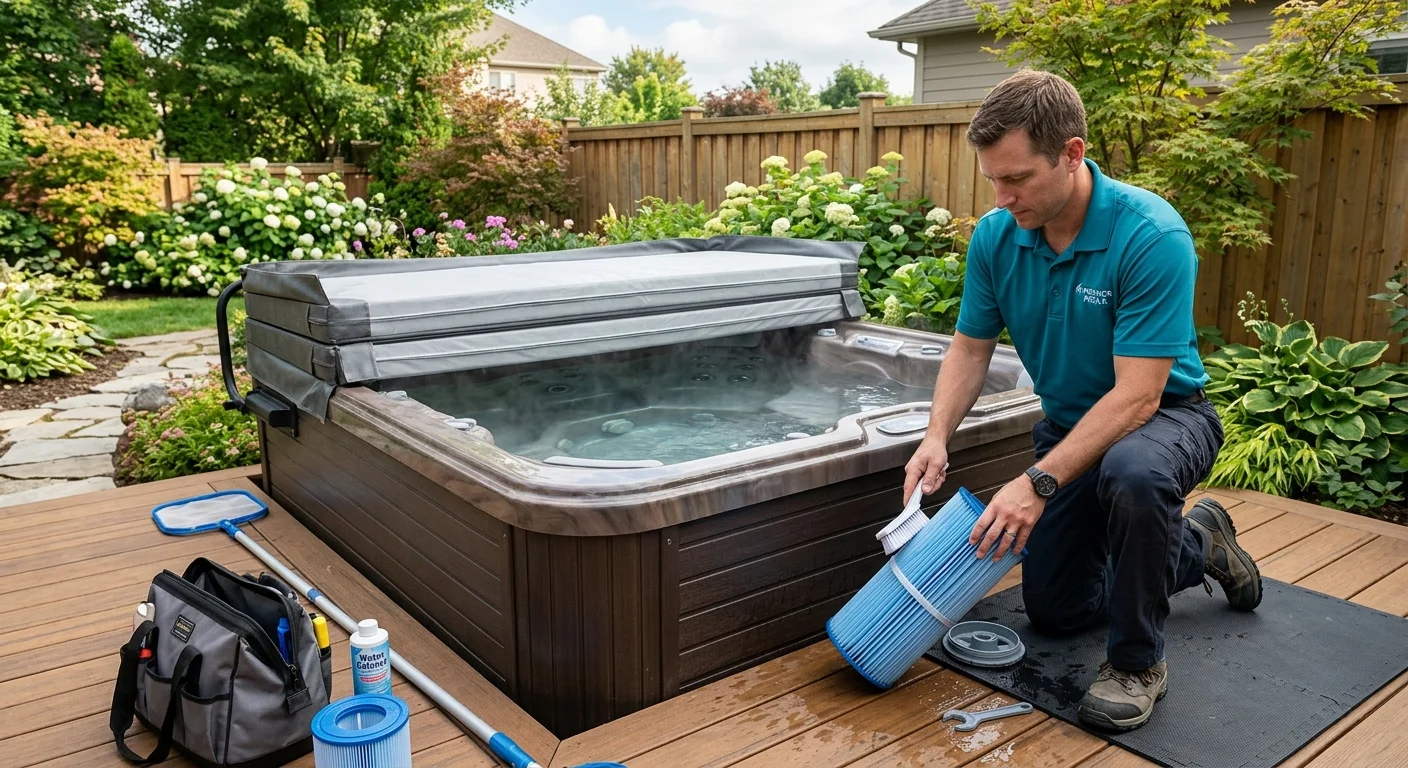
A hot tub in San Diego County needs a maintenance schedule that accounts for salt air on the coast, fine dust from Santa Ana winds inland, and the concentrated chemistry of a small, hot, aerated body of water. The framework is simple: weekly checks, monthly cleaning, quarterly inspections, and a drain schedule driven by your own testing log rather than a fixed calendar date. Keep your manufacturer manual nearby for every step.
Why spas degrade faster than pools
A spa packs heat, aeration, bathers, and chemicals into a compact space. Lotions, sunscreen, detergent residue, leaves, and dust contaminate the water quickly. Jets circulate water and air at a rapid rate. Foam or odor shows up soon after use if anything drifts off balance. That concentration means small problems surface fast, and a consistent schedule catches them before they compound.
San Diego variables that change the schedule
Coastal homes from Point Loma through Encinitas deal with damp marine air and a salt film that settles on surfaces. Inland areas like Poway and El Cajon run hotter and drier. Santa Ana winds deposit fine dust on covers, steps, and the water itself.
Observation beats a rigid calendar here. An evening-use spa needs closer attention than one you soak in occasionally. Wind, landscaping debris, and an uncovered tub all increase the workload. Adjust your schedule around actual use and what you see.
Establish a baseline first
Before you start any routine, note your spa’s normal clarity, jet strength, sound, temperature, and test results. Write them down. Every future check becomes a comparison against that baseline. Without it, you are guessing from memory.
Weekly tasks
Start by inspecting the water before adding anything. Check clarity, surface foam, the waterline, and visible debris. Run the jets and compare flow against your baseline. Listen for unfamiliar sounds and note any error messages on the control panel.
Test the water with a fresh, properly stored kit. Measure what your spa manual requires. Follow the manual’s target levels and product directions. Never guess from appearance or odor. Write down every reading and every adjustment you make.
Wipe waterline residue and the underside of the cover using only manufacturer-approved methods. Confirm the cover sits correctly with no standing water on top.
For more on what to test and why, see our guide on pool water testing.
Monthly tasks
Pull the filter and inspect between the pleats for trapped debris. Look for discoloration, bent material, or damaged end caps. Clean the cartridge according to its label and your spa manual.
Inspect jet faces, intake grilles, pillows, and cup areas. Never remove guards or open electrical enclosures. Review your monthly testing log for recurring patterns that might signal a developing issue.
Quarterly tasks
Walk the equipment area. Look for moisture, staining, or corrosion. Check for pests or connections that look loose. Examine the cover, cabinet panels, and any accessible plumbing. Confirm your routine still matches the current manufacturer instructions, since some brands update their guidance.
Filter cleaning done right
Clean the filter based on condition and flow, not an arbitrary reminder. A weekly inspection doesn’t mean a weekly deep clean.
Turn the system off following your spa manual’s procedure. Remove the filter without forcing the cap, housing, or retaining parts. Rinse between the pleats with gentle water pressure, working top to bottom and rotating the cartridge as you go.
Use a cleaning product only if the cartridge maker permits it. Never substitute household cleaners. Residue from the wrong product causes foam and skin irritation.
Some owners keep a second compatible cartridge for rotation. The spare must match your spa’s specifications exactly. Mark each cartridge so you can track which one is in service. Never assume two filters are interchangeable just because they look similar.
Seat the cartridge exactly as the manual shows. Restart the spa and confirm normal circulation. If weak flow returns right after cleaning, the problem is elsewhere and needs professional diagnosis.
If your spa shares equipment with a pool, persistent flow or heating issues may point to a broader repair need. Our post on spa and hot tub repair in San Diego covers what that looks like.
Draining and refilling
No single drain interval fits every spa. Design, frequency of use, treatment method, debris load, and refill water quality all factor in. Follow the manufacturer’s schedule and use your testing log to judge.
Persistent foam, cloudiness, residue, or unstable chemistry are warning signs. Before you drain, check the filter, your testing method, the products you are using, and recent use patterns. Consult the manual or a specialist before adding more products to chase a symptom.
Plan the drain before opening any valve. Read the shutdown instructions and protect the empty shell. Confirm the discharge location with your city, water district, or wastewater provider. Correct discharge direction depends on your property and local rules. The San Diego County Water Authority has regional water information that can help you find the right guidance.
For refill, follow the manufacturer-specified fill point and startup sequence. Never energize equipment early. Trapped air or a wrong water level complicates startup. Use the model-specific procedure.
Once circulation runs, test the fresh water. Add only products listed for your spa, following label order and amounts. Record starting readings and the refill date. That entry becomes your new baseline.
San Diego’s hard water affects refill chemistry. Our post on hard water and San Diego pools explains what that means for your equipment and surfaces.
Common maintenance misses
Treating every symptom as a chemistry problem is the most frequent error. Weak jets, slow heating, and error codes need diagnosis, not more product. Unexplained water loss or moisture near the equipment needs a professional look. Adding chemicals won’t fix a mechanical or electrical fault.
Ignoring small changes because the spa still runs is another miss. A new hum, a damp cabinet edge, irregular circulation, or a recurring reset all deserve attention. Write down the timing, mode, and what the control panel displays.
A filter can appear clean while debris sits deep in the pleats. It can also be installed incorrectly after cleaning. Confirm orientation, retaining parts, and seating against the manual.
The cover underside returns dirt to clean water if you skip wiping it. A poor cover fit lets windblown debris inside. On the coast, inspect the cover for salt film. After Santa Ana events, check the folds and edges for dust.
If you suspect water is escaping the shell, our guide on spa and hot tub leak repair walks through what to look for.
Stop troubleshooting and call for service
These symptoms fall outside preventive care: persistent leaking, heating failure, breaker trips, burning odors, and damaged wiring. None of them respond to chemical adjustment. You can verify any contractor’s status through the CSLB license lookup before hiring.
When to call us
If routine cleaning and adjustments aren’t restoring normal function, or if you are seeing any of the escalation symptoms above, it is time for a licensed professional. Call us at (858) 400-4404 and we’ll connect you with a licensed local pool specialist.
Frequently asked questions
What should I check on my hot tub every week?
Check water clarity, surface foam, waterline residue, jet strength, and cover condition. Test the water with a fresh kit and compare readings against your recorded baseline. Follow your spa manual for target levels and product directions.
How often should I clean my hot tub filter?
Inspect the filter weekly, but only clean it when your manual, pressure reading, or flow indicates. The interval depends on how often you use the spa, how much debris gets in, and the filter model.
How often do I need to drain and refill my hot tub?
There is no universal drain interval. Follow your manufacturer's schedule and use your testing log to judge. Persistent foam, cloudiness, or unstable chemistry are signs it may be time. Always confirm discharge rules with your city or water district first.
When does hot tub maintenance become a repair job?
Persistent leaks, heating failure, breaker trips, burning odors, or damaged wiring fall outside preventive care. These need a licensed specialist for diagnosis, not more chemicals.
Need professional help in San Diego County?
Splash Pool SD connects you with a licensed specialist for any service in this post.