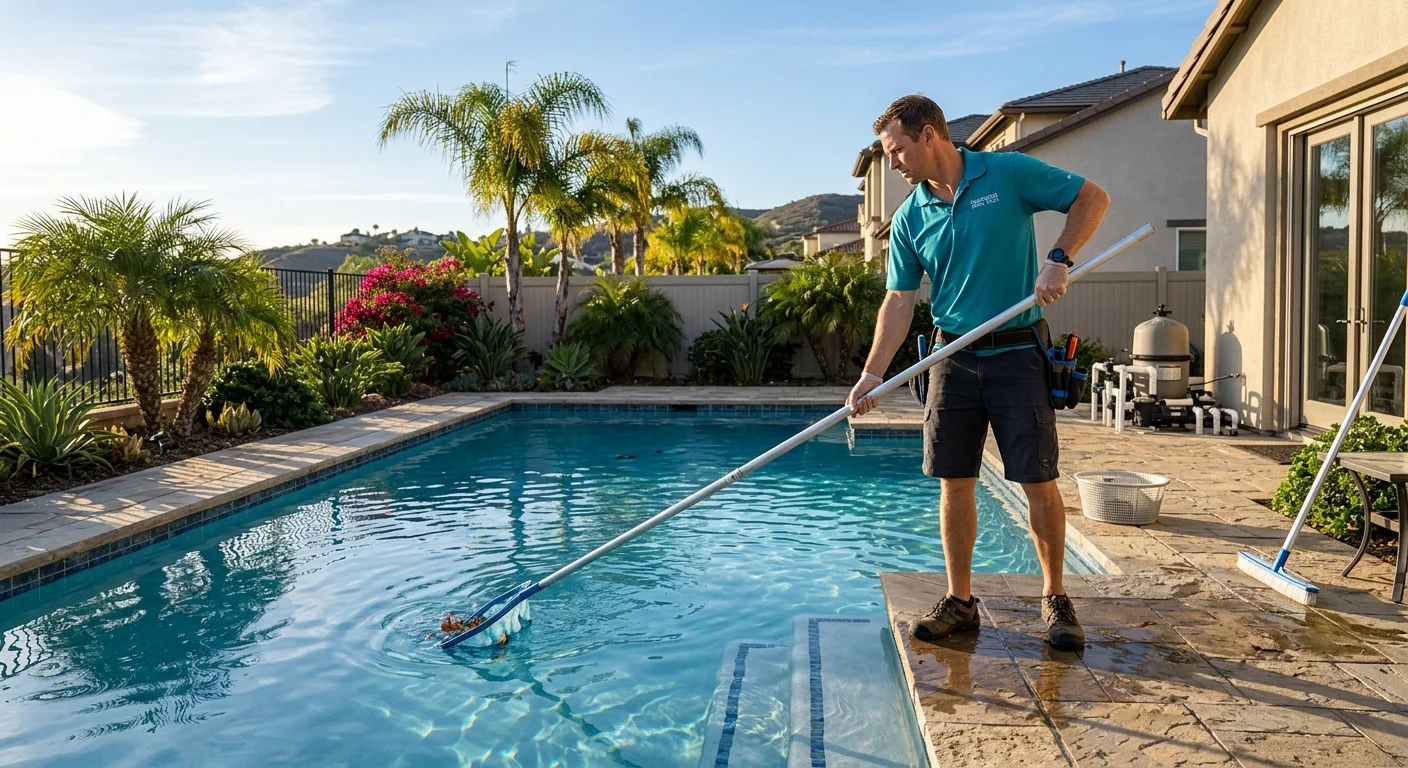
Most San Diego County pools don’t need traditional winterizing. They stay open year-round with adjusted circulation, chemistry, and cleaning routines. The full shutdown you see in freeze-climate guides, where water is lowered, plumbing is cleared and plugged, and equipment is sealed for months, doesn’t apply here. Copying those checklists can actually damage your system.
Why San Diego pools stay open
Across most of the county, pools remain in service through the cooler season. Swimming may stop, but the water and equipment still need ongoing care. An open pool keeps circulating, filtering, and testable. That avoids the work of reversing a full closing in spring.
This holds true from Oceanside and Encinitas down through La Jolla, Point Loma, Coronado, and Chula Vista. Coastal properties rarely see conditions that would justify a shutdown.
“Open” doesn’t mean unchanged summer settings. Cooler weather, wind, leaves, and rain all alter what the pool needs. Pump schedules, heating, cleaning frequency, and chemical dosing should adapt to the season.
San Diego County isn’t one climate
A coastal yard in Encinitas has different needs than a shaded lot in El Cajon, Alpine, or Ramona. Elevation, wind exposure, shade patterns, plumbing placement, and equipment pad location all matter. No single winter checklist covers coast to foothills.
East of Interstate 15 and along Interstate 8 toward the foothills, overnight temperatures drop lower than coastal readings suggest. If your property sits in one of these zones, don’t rely on a coastal forecast to guide your equipment decisions.
Three service needs to separate
Before requesting any work, identify which of these you actually need:
- Routine seasonal adjustments for a pool that stays in operation.
- Cold-snap preparation for exposed equipment at inland or elevated properties.
- Extended-absence care while the home sits empty for weeks or months.
Mixing these up means paying for the wrong scope. A seasonal tune-up isn’t a full shutdown, and a full shutdown is overkill for most San Diego homes.
What a seasonal adjustment looks like
A pro handling seasonal care should address circulation, chemistry, equipment condition, and a cold-weather plan. Ask them to define “closing” in their scope so you both mean the same thing.
Generic packages written for other climates are inappropriate here. The scope should reflect your specific pool, its equipment, and its exposure.
For more on what regular service includes, see what pool maintenance service covers.
Winter pump run times
No single winter pump schedule fits every pool. Run time depends on your pump model, pool size, plumbing layout, debris load, sanitizer type, water condition, and usage level.
Start with evidence from the pool itself. Check clarity, surface movement, skimming action, and debris collection. Review the manufacturer’s instructions before changing schedules. Don’t cut run time just because swimming stopped.
For a deeper look at scheduling, read how long to run your pool pump in San Diego.
Winter chemistry
Water care continues through the cooler months. Test results should guide every chemical addition. Don’t copy another homeowner’s dosing routine, and don’t add products without knowing your current readings.
Wind moves leaves, dust, and debris into the water. Rain can shift conditions quickly. Check baskets and water quality after weather events.
Correct targets depend on your system and the products you use. Follow your test method, equipment instructions, and product labels. If readings conflict or the water seems unresponsive, ask a specialist.
Cloudy or green water signals that the care plan has failed and needs attention.
San Diego’s hard water adds another layer. Read how hard water affects San Diego pools for specifics.
Cold-snap risks for inland properties
If your equipment pad sits in a shaded or exposed location inland, cold nights are a real concern. Identify your pump, filter, heater, valves, controller, and electrical connections. Keep equipment instructions accessible.
Confirm that any freeze-protection function is configured and active. Don’t assume it is. A specialist can review the setup and explain the operating plan.
Never turn off circulation or drain equipment blindly during cold weather. Don’t move valves without understanding the system. An unplanned shutdown during a cold snap is how damage happens.
If a cold night has already passed, inspect the equipment pad. Look for water beneath equipment, damaged housings, unusual sounds, error messages, or missing circulation. Never repeatedly restart equipment that appears damaged.
For urgent situations, see emergency pool service in San Diego.
Extended absence planning
Leaving for months creates a different problem. The pool may not need closing, but it shouldn’t be abandoned either. Water, debris, circulation, and equipment all need periodic checks.
Arrange a responsible person or a specialist to monitor the pool. Provide clear equipment access and written instructions. Record controller schedules and valve positions before you leave. Photos help identify changes later.
A good absence plan covers:
- Water testing based on actual readings.
- Basket, surface, and floor debris management.
- Pump, filter, heater, and controller condition checks.
- Visible leaks or standing water near equipment.
- Cover care if the pool uses a fitted cover.
- Steps for equipment error response.
Heaters, spas, solar systems, water features, and automated covers each may need their own separate plan. Don’t assume one switch prepares every component.
If you are inland, review exposed plumbing and cold-weather settings before departure. This is especially useful when no one familiar remains nearby.
A pool cover doesn’t replace water and equipment care. Confirm the cover is compatible with your pool and follow the manufacturer’s instructions. Keep the deck and equipment access clear. For cover options and care, see pool covers in San Diego.
On your return, inspect water and equipment first. Document green water, low circulation, leaks, controller errors, and visible damage. That documentation gives a specialist a clearer starting point.
What about cost
No verified local winterizing price is available from approved sources. The scope of work varies by pool size, finish, equipment brand, access, and whether the job is a seasonal adjustment or a full cold-snap plan. A matched pro should provide a written, itemized quote for your actual pool before work starts.
Before approving any work, verify the contractor’s status through the CSLB license check.
When to call us
If circulation stops, equipment leaks, controls fail, or cold weather may have damaged your plumbing, you need a licensed pool professional on site. Call us at (858) 400-4404 and we’ll connect you with a licensed local pool specialist.
Frequently asked questions
Do I need to drain my pool equipment for winter in San Diego?
No. Draining your filter, pump, heater, or plumbing lines without a specific reason can cause damage. Only drain equipment if the manufacturer instructions or a licensed specialist direct you to. Most San Diego pools keep circulating through the cooler months.
What is the difference between pool closing and seasonal maintenance?
A full closing is a deliberate shutdown designed for freeze climates: water is lowered, plumbing is cleared and plugged, and equipment is prepped for months of inactivity. Seasonal maintenance in San Diego means adjusting pump schedules, chemistry, and cleaning routines while the pool stays open and circulating.
Should I cover my pool for winter in San Diego?
A cover can reduce debris and evaporation, but it does not replace water testing, circulation, or equipment checks. If you use a fitted cover, confirm it is compatible with your pool and follow the manufacturer's instructions. The pool underneath still needs periodic attention.
My pool is inland near El Cajon. Do I need freeze protection?
Inland and elevated properties east of Interstate 15 and along Interstate 8 toward the foothills face colder overnight conditions than the coast. A licensed specialist can review your equipment pad, confirm freeze-protection settings are configured correctly, and build a cold-weather plan for your specific setup.
How much does pool winterizing cost in San Diego?
No verified local closing price is available from approved sources. The scope of work varies by pool size, equipment, access, and whether you need seasonal adjustments or a full cold-snap plan. A matched pro should provide a written, itemized quote for your actual pool before any work starts.
Need professional help in San Diego County?
Splash Pool SD connects you with a licensed specialist for any service in this post.