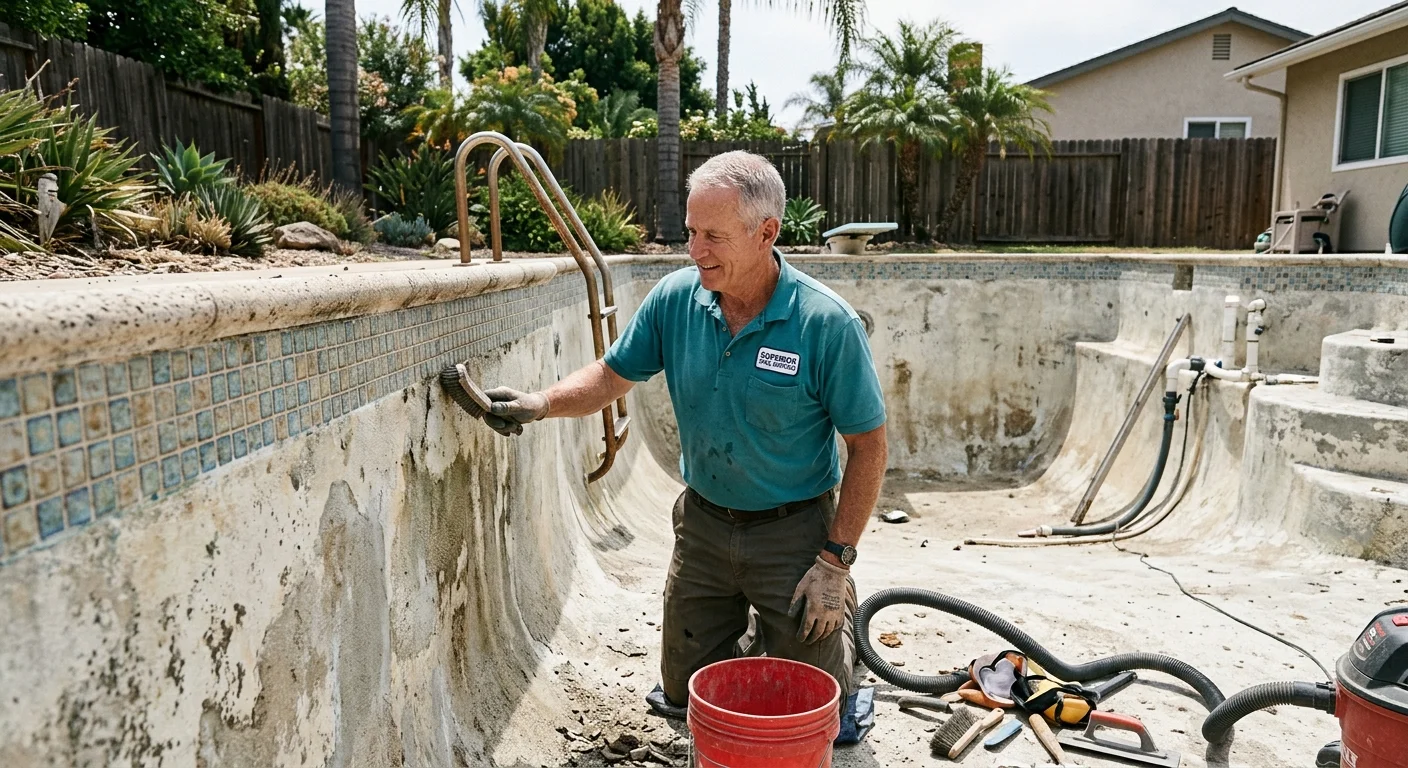
Restoration fixes confirmed wear or damage while keeping your pool’s footprint, layout, and intended use. A remodel changes the look, function, or yard fit of the pool. The difference matters because it shapes your scope, your permit requirements, and what you should expect from a proposal. If your pool is losing water or the surface is flaking, you need restoration. If you want a bench, a new shape, or a water feature, you are remodeling. Many San Diego homeowners need both at once, and that is fine. The key is separating what is broken from what you want to change.
What restoration covers
Restoration addresses parts of the pool that have failed or worn past their useful life. The scope may include the finish, tile, coping, plumbing, or equipment. Resurfacing is often the largest visible component. It removes or prepares the worn interior so a new finish can bond properly.
Surface clues that point toward restoration include roughness, cracks, staining, flaking, and exposed material beneath the finish. Not every old component gets replaced, though. A licensed specialist assesses what has actually failed versus what still has life left. Visible damage isn’t always cosmetic. A crack might indicate movement. Worn plaster might coexist with a leak or an equipment issue.
The core question for restoration is simple: what repairs restore this pool to sound working condition? You don’t assume scope from photos alone. The pro who inspects your pool writes a condition-based scope specific to what they find.
What a remodel covers
A remodel aims to change how the pool looks, functions, or fits the yard. Repairs may be included, but they aren’t the whole project. Possible changes include new steps, a bench, a different coping profile, updated tile, a new finish color, or a water feature. Larger plans may alter the pool’s shape entirely.
Older appearance alone doesn’t mandate remodeling. A finish swap by itself doesn’t determine the label either. A new color on a failed finish is still restoration. New features plus layout changes indicate a remodel. Each change must appear in the written scope.
If you are weighing design ideas, our San Diego pool remodel ideas guide separates useful upgrades from optional ones. Request a proposal split that shows confirmed repairs separately from elective changes. That split protects you from paying for work you didn’t ask for.
Start with condition, not the finish catalog
A design choice won’t explain water loss or structural movement. Before you pick a pebble finish or a tile pattern, document what is actually wrong.
Widespread roughness, flaking, or exposed interior calls for a resurfacing assessment. Our post on signs your pool needs resurfacing walks through what to look for. Cracks need classification. Location and context matter, and our guide on cracked pool plaster repair explains the difference between surface crazing and structural concern.
Ongoing water loss requires investigation before you select any finish. Loose tile or coping means the substrate beneath needs inspection. List your pump, filter, heater, light, and plumbing separately. Mark problem areas with removable tape. Take wide and close-up photos. Note whether a symptom is constant or intermittent.
Ask the pro to categorize each finding: function, appearance, or uncertain. An unexplained allowance on a proposal isn’t a diagnosis. This applies across San Diego County, whether your pool is in Encinitas, El Cajon, City Heights, or Chula Vista. The contractor must assess your specific pool.
Permits and the California Swimming Pool Safety Act
Permit questions follow the proposed work, not the project label. The same label can cover materially different scopes. Submit your written list of changes to the permitting authority responsible for your address. Ask which items need a permit, which need inspections, and what documents are required. A scope change may change the permit answer.
The California Swimming Pool Safety Act applies to private single-family homes. It triggers when a permit is issued for construction or remodeling. The act requires a minimum of two out of seven drowning-prevention features. An enclosure is the first listed feature, but the act isn’t simply a fence mandate and it isn’t a blanket retrofit for all existing pools. Our post on California pool fence law in San Diego covers the details.
Don’t rely on old proposals or another homeowner’s permit experience. Confirm with the authority that governs your address. Get the answer before ordering materials or starting construction.
Ask your contractor for their license number. Verify it through the official CSLB license check online. Confirm the record matches the contract name. Our guide on checking a pool contractor’s license in California walks through each step.
Splash Pool SD doesn’t perform work or pull permits. We connect homeowners with licensed independent pros. Permit responsibility is documented between you and the contractor you hire.
Sequencing a combined project
Restoration and remodel can share one project. Settle condition questions before you finalize finishes or features. Later discoveries can disrupt early choices, so start with an investigation phase.
Document surface damage, leaks, plumbing condition, equipment status, and your design wishes. Resolve testing or access needs before locking scope. Separate required repairs from elective improvements. Decide remodel ideas after repair needs are clear.
Confirm permit and inspection requirements for the combined scope. The written proposal must show the order of work. Plumbing, features, steps, and shape changes precede the final finish. Tile and coping coordinate with the chosen finish. Ask the contractor to explain the sequence in plain language.
Keep a record of approved selections and scope changes. If a hidden condition is found, the contractor must give you a written explanation before you authorize additional work. The revision must identify the discovery and its impact on the plan.
Compare proposals beyond final totals. Look at conditions, included work, exclusions, materials, permits, and payment terms. There is no standard price for restoration or remodel in San Diego. The contractor quotes after reviewing your actual pool and the changes you want. Factors like pool size, finish material, access, equipment brand, and permit requirements all move the number. If you want to understand what drives cost, our post on pool remodel cost in San Diego breaks down the variables.
When to call us
Worn surfaces, cracks, leaks, or design changes all need a professional assessment before you commit to a scope. A licensed specialist identifies what is broken, what is salvageable, and what the permit path looks like for your address. Call us at (858) 400-4404 and we’ll connect you with a licensed local pool specialist.
Frequently asked questions
What does pool restoration actually cover?
Restoration renews your existing pool without changing its footprint or layout. It addresses confirmed wear or damage: resurfacing, tile, coping, plumbing, or equipment that has failed. A licensed specialist identifies what needs replacement versus what is still salvageable.
Is resurfacing considered restoration or a remodel?
Resurfacing alone is typically restoration. It removes or prepares a worn interior for a new finish. If you are also changing the pool's shape, adding features, or altering the layout, the project crosses into remodel territory. The full scope matters more than the label.
Do I need a permit for pool restoration in San Diego?
Permit requirements follow the proposed work, not the project label. Submit your written list of changes to the permitting authority responsible for your address and ask which items need a permit or inspection. Get the answer before ordering materials or starting construction.
How do I verify a pool contractor's license in California?
Ask the contractor for their license number, then verify it through the official CSLB license check online. Confirm the record matches the contract name. You can also read our guide on checking a pool contractor's license in California.
Need professional help in San Diego County?
Splash Pool SD connects you with a licensed specialist for any service in this post.