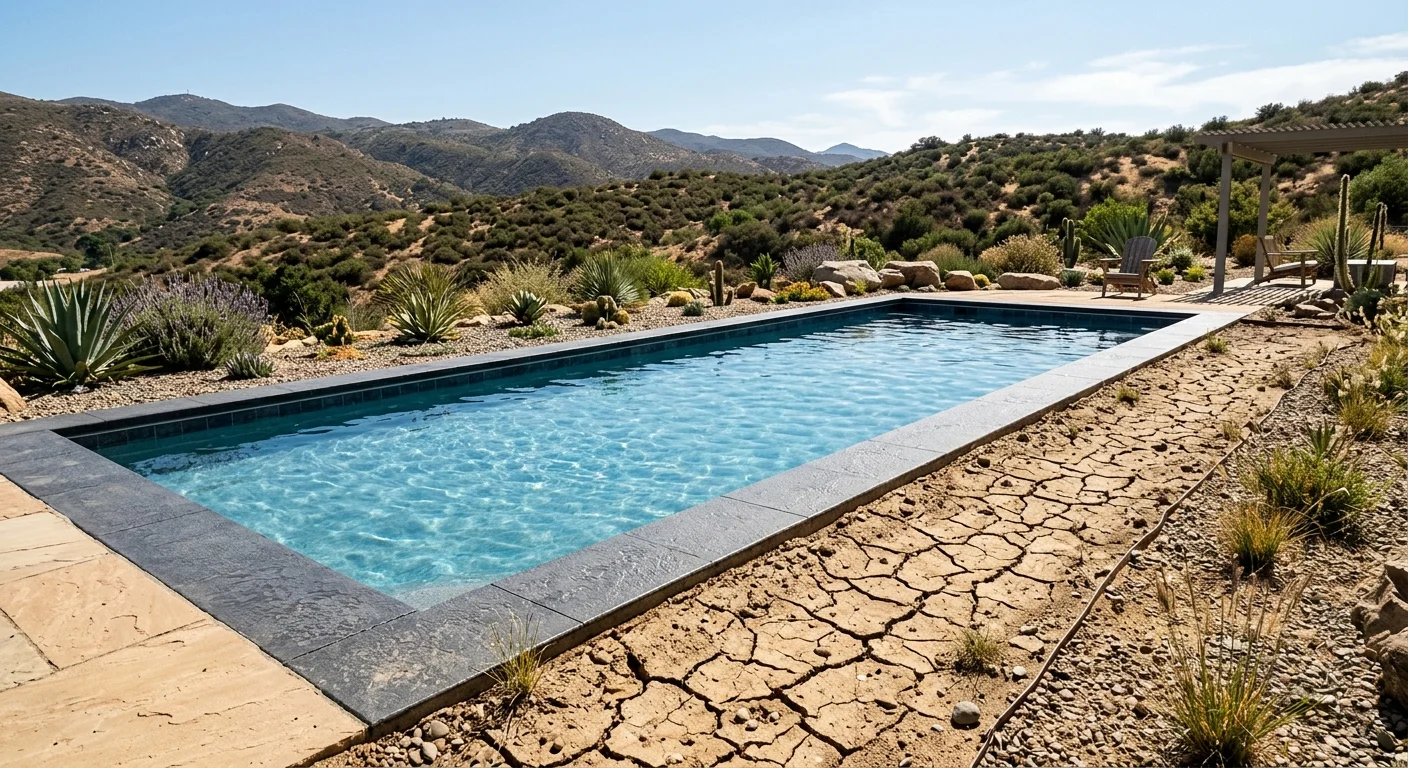
A Hidden Meadows gunite pool can drop overnight after a stretch of 90-degree days. The wet strip along the coping is not always irrigation. Inland Escondido sits on expansive clay that shrinks in heat and swells after rain. That movement is why pool leak detection in Escondido starts with soil and plumbing, not a guess at the skimmer.
Clay soil, heat, and why Escondido shells move
Coastal Del Mar leaks often live on bluff lots and salt air. Escondido is a different job. The valley floor, the hills around Daley Ranch, and the older streets off Centre City Parkway bake in summer. Nights cool. The clay under the deck still dries and cracks.
Expansive clay does not stay still. Dry months pull moisture out of the soil. The ground contracts around buried PVC and the gunite shell. A winter storm or a long irrigation cycle puts water back. The soil swells. Fittings at the tile line, skimmer throats, and 90-degree elbows take that stress first. A leak that shows up after a drought, then a wet week, often traces to that cycle. Soil history is a clue. It is not a diagnosis.
Central Escondido and Hidden Meadows still hold a lot of older gunite. Those shells were built for inland heat, but decades of sun, dust, and hard water wear the plaster and every penetration. Harder inland water is a fair qualitative read. Grain-per-gallon figures on random city pages conflict, and we do not publish a number we cannot confirm. Read the current quality report from the City of Escondido or your district if you need a figure.
Dust from dry lots and the I-15 corridor loads the filter. Dust does not cause a leak. It does hide wet spots. A yard near Kit Carson Park or along Felicita can show a dark ring in the clay and look like a dumping pool. Sometimes it is. Sometimes a slope is carrying irrigation downhill under the deck.
Newer tracts on fill can settle too. Fill and clay together make a moving bed for underground return lines. Hillside lots toward Valley Center Road and Lake Wohlford add grade, so water from a small fitting leak can travel far from the source. That is the inland North County fingerprint. It is not the same as a Del Mar pool leak on a coastal bluff.
Leak versus evaporation in inland North County
Inland North County loses more water to sun and wind than a foggy coastal yard. A low waterline in August is not proof of a leak. Heat, wind down the valley, and an uncovered surface all pull volume. A spa spillway loses more. So does a pool left uncovered on a dry, windy afternoon.
Do not treat any inch-per-day figure as a local rule. No verified Escondido evaporation rate sits in our claims file. Confirm what counts as normal loss with the leak-detection pro who walks your yard. A bucket test still helps that conversation. Fill a bucket with pool water. Set it on a step so the water in the bucket and the pool start at the same mark. Leave it 24 hours. Note the drop in the bucket and the drop in the pool. Run one day with the pump on and one day with it off, if you can do that safely. The pattern tells the pro whether to look at the shell, the suction side, or the returns first.
Irrigation overspray is the other inland trap. Escondido yards run spray heads hard in summer. Overspray wets coping, stains the deck, and soaks clay along the bond beam. A pool leak can look the same. Shut the irrigation off for a day and watch. If the wet strip dries and the waterline still falls, the pool is the suspect. If the soil stays wet only when the heads run, call the landscaper before anyone cuts concrete.
A rising water bill can be the house, the irrigation, or the pool. The City of Escondido meters the property, not the pool as a separate line. We could not confirm a rule that the water company must notify you of a private pool leak. Check usage with your city utility and with San Diego County Water Authority conservation guidance, then bring those readings to the visit.
Air in the pump basket, a pump that loses prime, or algae that returns after a clean chemistry check can point to a suction-side leak. None of those signs prove a location. They tell the pro where to start. Our county guide on pool leak or evaporation in San Diego walks through the same split without Escondido clay in the mix.
Plumbing, fittings, and deep-end failure points
Most finds are not a dramatic shell crack. They are fittings. Skimmer throats, return fittings, light niches, and the main-drain ring sit where plaster meets plastic. Clay movement tugs those joints. Older gunite in central Escondido and Hidden Meadows has had decades of that tug.
The equipment pad is the easy visual check. Look at the pump lid, shaft seal, filter tank, valve unions, and heater unions. Standing water on the pad can be a pad leak or drainage from the slope. Do not assume it is underground until someone isolates the equipment.
An underground pool pipe leak in Escondido often sits under the deck between the pad and the shell. PVC elbows near the equipment, the deep-end returns, and the suction run to the main drain take the most soil stress. Water follows the path of least resistance. A wet patch by the side yard can start at a fitting ten feet away under the coping.
Tree roots along older streets find the same trenches. Large trees near a rear setback can ride a pipe run. The pro still has to pressure-test the line. Roots are a suspect, not a map.
Do not treat dye as a guarantee. Dye at a return or a crack can show suction. It can also wash away in a current and look like a miss. Pressure isolation of each line is what proves a buried break. Detection finds the leak. Cutting the deck, relining, or rerouting is repair work for the licensed specialist you get matched with, not a weekend saw cut.
How a leak-detection pro works a slab and yard
A serious visit is not a walk-around with a flashlight. The licensed pro starts with what you already recorded: waterline marks, pump-on versus pump-off loss, irrigation off, and any wet soil. Then they isolate systems. How pool leak detection works is the same sequence on an Escondido slab, with more listening time on thick hardscape and clay.
Pressure testing closes off suction and return lines and tests them one at a time. A line that will not hold pressure is the failing run. That is how a buried break gets named before anyone saws the deck.
Electronic listening uses ground microphones or hydrophones. The pro walks the deck and the clay strip beside the coping, listening for the hiss of a break. Expansion joints and paver beds hide sound. Escondido hardscape is often thick, so the pro may listen at several points along the same run.
Dye testing is for the shell and the penetrations. Skimmer throat, returns, light niche, steps, and hairline plaster cracks. Dye does not replace pressure tests on buried PVC. Some jobs need a diver. Some do not. Ask what the visit includes.
Ask for written notes: which line failed, where they heard it, and what they recommend before a saw comes out. Ask what happens if a second leak shows after the first repair. We publish no detection price list. A planning figure you see on a directory is not a quote from this brand or from the matched pro. Confirm the fee, what tests it covers, and whether it credits toward repair with the specialist on the phone.
Confirm the contractor on the CSLB license lookup before anyone digs. California work under $1,000 is exempt from a contractor license only when the job is casual or minor and no building permit is required, a threshold that took effect January 1, 2026. Splitting a job to stay under that number does not create an exemption. Anyone who advertises as a contractor loses it at any price. Acting as a contractor without a license is a misdemeanor unless an exemption applies.
What to shut off and record before anyone digs
Do this before the pro arrives. Mark the waterline on the tile with a pencil at the same hour two days in a row. Note weather, wind, and whether the cover was on. Note pump on or off.
Shut the automatic pool fill if you have one. A fill valve hides the loss. Keep topping off without notes and you erase the only baseline the visit needs.
Shut irrigation for a full day if you can. Photograph wet soil, then photograph it again dry. That split saves a false excavation. Escondido spray heads along a slope can wet the same coping a return-line leak would wet.
Do not start tearing deck. Do not dump a bottle of dye and call it found. If the pump is pulling air, stop running it until a pro says it is safe. A suction leak can damage a pump. That is equipment harm, not a reason to cut the yard at night.
Keep kids and pets off a collapsed soil strip. Clay that has been washing out under a deck can void. That is a fall hazard around the coping.
Bring your water-use printout if the bill jumped. Bring any prior repair invoices. Hidden Meadows and older central Escondido pools often have a history of return-line patches. The next leak may be the next fitting on the same run.
If the job needs a permit, the matched licensed pro handles that conversation with the city. We do not pull permits. We do not cut the slab. We match you with the specialist who does.
When to call us
Call when the waterline keeps falling after a bucket test, when soil stays wet with irrigation off, or when the pump sucks air. Call us at (858) 400-4404 and we’ll connect you with a licensed local pool specialist.
Frequently asked questions
How do you detect a leak in an Escondido pool?
A licensed leak-detection pro isolates suction and return lines with pressure tests, checks the shell and fittings with dye, and uses listening gear on the deck and yard. Start with your own notes: waterline marks, a bucket test, and irrigation shut off. No single home test names the exact pipe.
Is the water company supposed to notify me of a pool leak?
We could not confirm a rule that Escondido Utilities or any San Diego County water agency must notify you of a private pool leak. A pool usually sits on the house meter, so a jump in use can be the pool, irrigation, or indoor plumbing. Pull your own usage and ask the utility how they flag high use.
How much does pool leak detection cost in Escondido?
We publish no detection price list, and no verified Escondido fee sits in our claims file. Confirm the visit fee, which tests it covers, and whether it credits toward repair with the licensed specialist you get matched with. Repair of a buried line is a separate quote after the leak is found.
How do I tell irrigation overspray from a pool leak?
Shut the spray heads off for a full day and watch the soil beside the coping. If the wet strip dries and the pool still drops, the pool is the suspect. If the ground only soaks when the heads run, start with the landscaper before anyone cuts the deck.
Where can I find pool leak detection in Escondido?
Splash Pool SD matches Escondido homeowners with licensed local pool specialists for leak detection and underground repair. We do not send our own crews. Check the specialist on the CSLB license lookup before anyone digs.
Need professional help in San Diego County?
Splash Pool SD connects you with a licensed specialist for any service in this post.