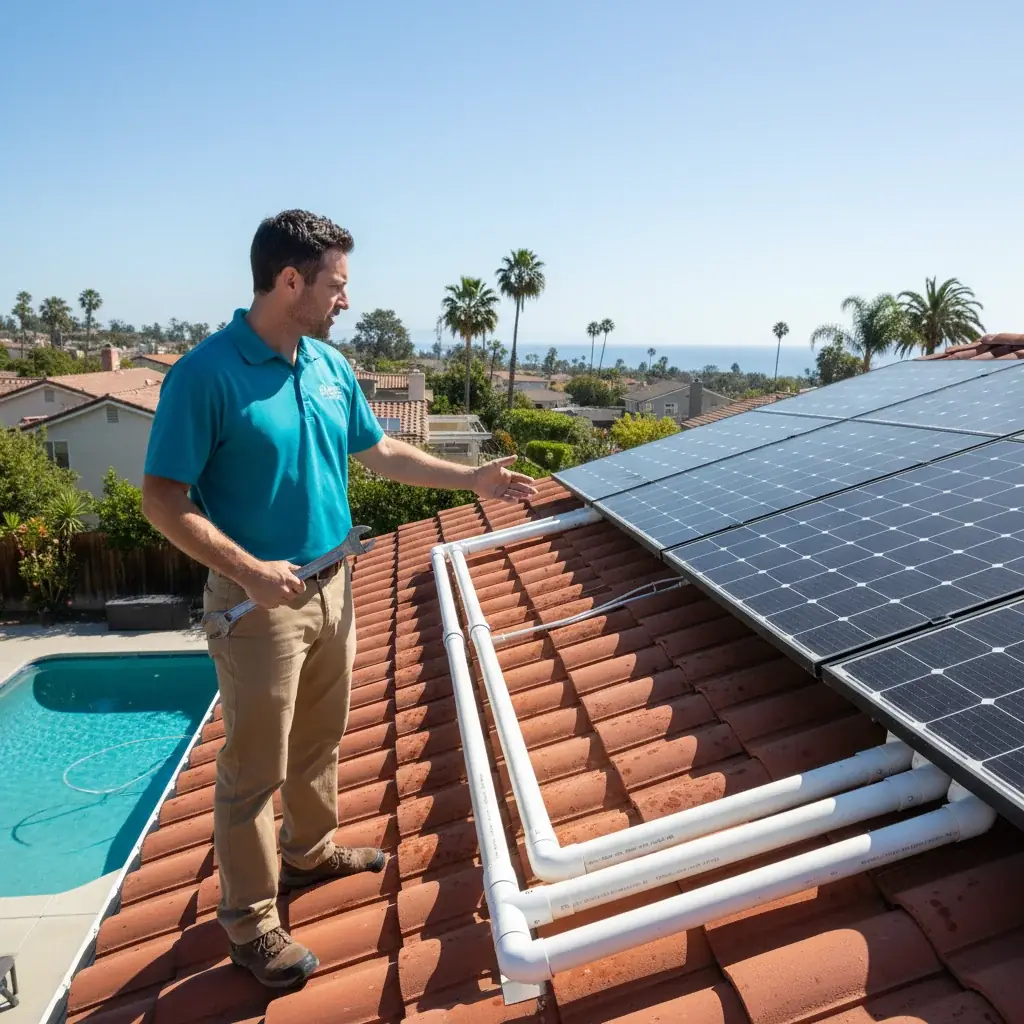
Solar pool heating in San Diego works through roof-mounted collectors, a diverting valve, and a solar controller. It isn’t a gas-heater swap. The system routes pool water through panels that absorb sun heat, then returns it warmer. On clear afternoons the array runs. On foggy mornings it idles. That rhythm suits the county’s climate, but the details change a lot between inland and coastal neighborhoods.
How the system works
Three components do the job: the collectors, the solar controller, and the diverting valve. Collectors sit on your roof or a ground rack. The controller monitors roof temperature against pool temperature. When the roof reads warmer, the valve opens and sends water up through the panels. When it doesn’t, water stays on the standard filter loop.
Nothing burns, no ignition sequence fires, and no gas line feeds the array. That makes solar simple in operation but dependent on direct sun.
Inland versus coastal: two different jobs
East County spots like El Cajon, Santee, and Escondido see more clear-sky hours and greater heat demand. Collectors there run longer and produce more output per season.
The coastal strip from La Jolla through Imperial Beach deals with salt air on hardware and heavier marine layer, especially in May and June. Salt air corrodes fittings and clamps faster than inland conditions. That means coastal installations need different inspection priorities.
County-wide sunshine claims are unreliable for quoting. A pro should size your array for your specific roof, not a regional average.
Repair versus replacement
A leaking coupling, a stuck diverting valve, or a failed isolation valve is repairable. The fix is usually a single part and a short labor visit.
Cracked, brittle, or non-circulating panels mean replacement. UV exposure degrades panel material over years, and once panels stop moving water efficiently, patching them doesn’t restore output.
Roof penetrations and flashing are part of the same inspection. Ignoring the roof during install or repair risks a separate leak that has nothing to do with the pool system. If your pool heater won’t turn on, the cause may be the valve or controller rather than the panels themselves.
Limitations to plan around
Solar produces no heat at night. It can’t replace a gas heater’s ignition path for evening swims. It also carries no guaranteed utility-bill reduction. If you swim after sunset or through overcast weeks, a backup heater or heat pump fills the gap.
A heat pump is a separate machine that pulls warmth from ambient air. It operates without roof collectors and pairs well with solar as a backup.
Compare solar-only versus dual-fuel setups in writing before committing. The matched pro should lay out both scopes so you can weigh comfort against ongoing cost.
Before you call
Photograph your existing collectors, the roof or rack they sit on, and the equipment pad. Note your neighborhood and any afternoon tree shade that falls on the roof. Decide whether you want solar alone or solar plus a backup heater.
Never climb a steep tile roof yourself. Leave that to the specialist.
Cost factors include collector count, roof access difficulty, and plumbing-run length. The pro you’re matched with quotes after an on-site assessment. For broader context on what drives equipment pricing, see our guide on pool equipment replacement costs.
When to call us
If your collectors are leaking, your valve is stuck, or you want a new array sized for your roof, that calls for a licensed pool professional who can inspect the system and quote accurately. Call us at (858) 400-4404 and we’ll connect you with a licensed local pool specialist.
Frequently asked questions
How much does solar pool heating cost in San Diego?
HomeGuide publishes a general U.S. planning estimate, but your actual quote depends on collector count, roof access, and plumbing-run length. The matched pro quotes after assessing your pool and roof on site.
Can solar collectors replace my gas heater entirely?
Solar heats only when the sun reaches the collectors. It cannot replicate a gas heater's ignition path for evening swims or overcast stretches. Some homes keep both and compare the dual setup in writing.
Do solar collectors work during marine layer season?
Coastal areas like La Jolla, Pacific Beach, and Encinitas see heavy May-gray and June-gloom. Collectors produce no output on fully overcast afternoons. Ask your specialist to size the array for your actual roof and swim season.
How do I know if my solar panels need repair or replacement?
A leaking hose, failed isolation valve, or stuck diverting valve is usually repairable. Cracked, brittle, or non-circulating panels need replacement. Photograph the leak and roof layout before calling so the specialist can quote accurately.
Is a backup heater legally required with solar?
No. Keeping a gas heater or heat pump alongside solar is a comfort choice, not a legal requirement. Compare solar-only versus dual-fuel on a written scope before deciding.
Need professional help in San Diego County?
Splash Pool SD connects you with a licensed specialist for any service in this post.