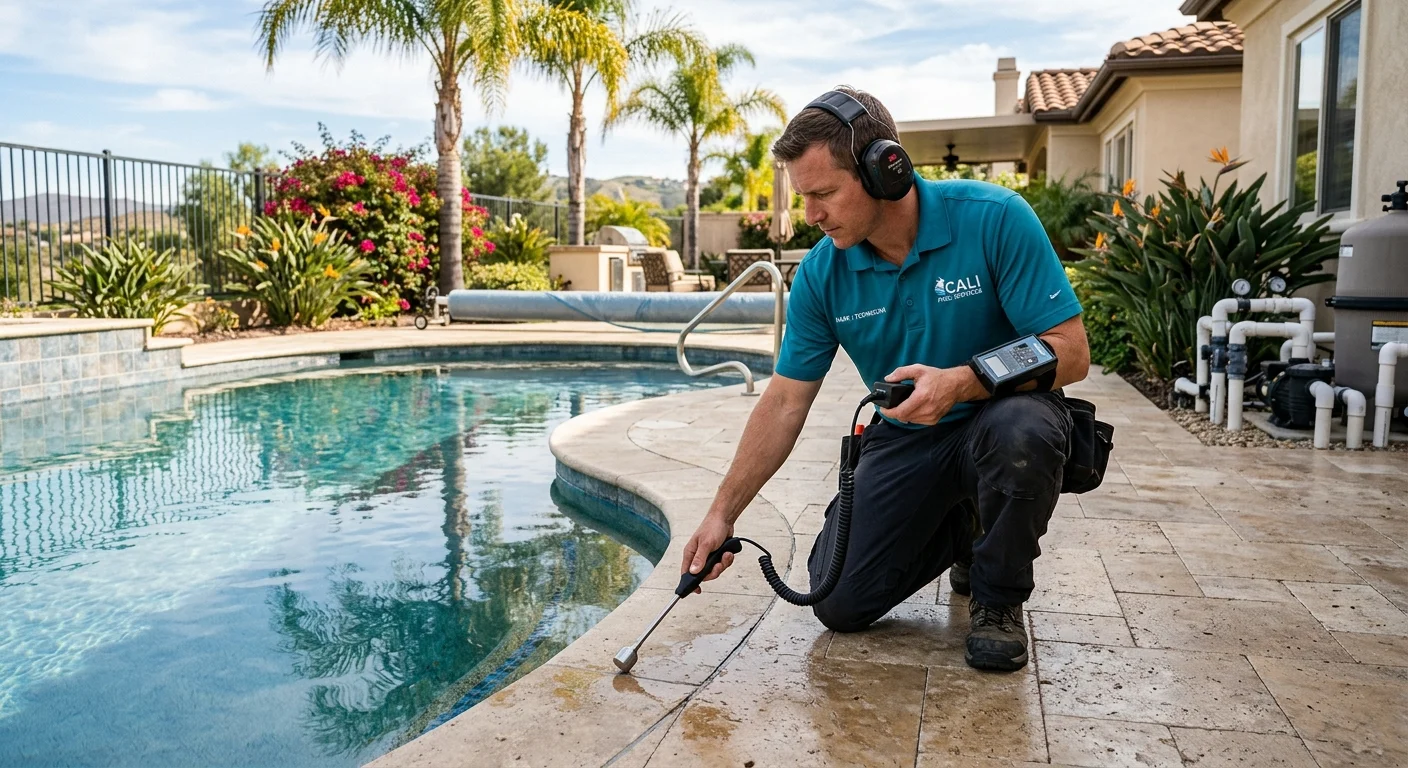
The cost of pool leak detection in San Diego isn’t a single number. It moves based on how many areas of your pool get tested, how complex the plumbing is, and how easy it is to reach the equipment. A simple rectangular pool with one return line costs less to diagnose than a multi-feature system with a spa, waterfall, and underground plumbing runs. No reliable countywide average has been confirmed, so the right move is to request a written quote that spells out exactly what the inspection covers.
What makes the price move
Several factors push the cost up or down. Understanding them helps you read a proposal and spot gaps.
Pool design and features
Every additional feature adds a potential leak point. Spas, waterfalls, raised walls, lights, and floor drains each introduce fittings and plumbing connections that need testing. A pool with multiple plumbing circuits requires more time and more methods than a basic shell with a single return. The difference between a simple pool and a multi-feature system is significant.
Access conditions
Where your pool sits on the property matters. A hillside lot in Mount Helix presents different challenges than an open lot in Poway. Tight side yards, locked equipment enclosures, and landscaping that covers plumbing routes all limit where a technician can place listening equipment or run pressure tests. Restricted access means more time on site, and that shows up in the quote.
Pool condition at the time of inspection
Cloudy water makes visual checks harder. Cracked plaster, loose fittings, standing water on the deck, or noisy equipment are all observations worth reporting to the specialist before they arrive. The more information you provide about timing and symptoms, the more efficiently the inspection can proceed.
Scope of testing
“Leak detection” isn’t one fixed service. It ranges from a visual walk-around to a multi-system inspection that includes pressure testing, acoustic listening, and dye checks. These scopes aren’t interchangeable. Clarify exactly what is included before you accept a proposal. A quote that covers only the shell and fittings isn’t the same as one that also evaluates underground plumbing.
Non-invasive methods and what they cover
A thorough inspection starts without disturbing finished surfaces. The technician checks equipment, fittings, tile lines, lights, and the shell visually, observing with circulation running and then stopped. Dye checks reveal water movement at accessible points. Acoustic listening narrows down where sound is coming from underground. Pressure testing evaluates selected plumbing runs in isolation.
These methods have limits. Plumbing routes may be unclear, sound travels through concrete, and multiple issues can exist at once. A good proposal states these limitations plainly rather than promising a guaranteed result.
If you want a deeper look at how each method works, our post on how pool leak detection works covers the process step by step.
The bucket test: a screening step
Before calling a specialist, you can run a simple bucket test at home. Place a bucket on a pool step and fill it to match the pool water level. Mark the inside of the bucket and the outside pool level with removable tape. Keep operating conditions consistent during the observation period.
If the pool level drops farther than the bucket level, a leak is likely. If they stay close, normal evaporation probably explains the loss. San Diego’s coastal and inland conditions differ significantly, so wind, sun, shade, and recent weather all affect the rate. Record conditions, circulation settings, and any recent water additions.
The bucket test doesn’t identify where the leak is. It is a screening step, not a diagnosis. A single observation isn’t enough. Physical inspection is still needed. For more on telling a leak apart from evaporation, see pool leak or evaporation in San Diego.
Detection and repair are separate scopes
Detection identifies the location. Repair defines the physical work. You can’t price them as one fixed scope before testing is done. A pipe leak under a deck costs differently than a loose fitting at the equipment pad. Depth, access, and materials all factor in.
Before any surfaces are opened, ask how tightly the problem has been narrowed and what uncertainty remains. Cutting concrete without a clear target expands the work uselessly. Clarify who does the repair, what materials are used, and whether deck restoration is included. Other trades or property approvals may be needed. Discuss all of this before anything is cut.
Our guide on pool repair cost in San Diego covers what drives repair pricing once the leak is found.
Comparing bids
When you have more than one quote, equalize the scopes before comparing totals. One bid may cover the shell, fittings, equipment, and underground plumbing. Another may only test the area where you noticed the symptom. A lower quote is meaningless if it excludes key tests.
Compare methods, not just equipment lists. Ask which areas each method covers. Review exclusions carefully: spas, water features, concealed plumbing, deck opening, and restoration are commonly left out. Don’t assume inclusion just because your pool has that feature.
Ask about the format of findings and what happens if results are inconclusive. Confirm whether further testing requires new approval. Use the same property information for both bids. Share your bucket test notes, photos, observations, and the circumstances around the water loss. Note whether the level changes during circulation, at rest, or both.
Separate confidence from guarantees. Choose the bid that defines the assignment most clearly. Before authorizing any repair, verify the contractor through the CSLB license check.
What a good proposal includes
A written proposal should list the areas to be tested, the methods used, any exclusions, and the deliverables you receive. Deliverables typically include marked locations, photos, test notes, and a written description. Confirm what your specific specialist provides.
The proposal must state whether it covers diagnosis only or includes repair. It should identify what authorization is needed before additional work begins. Don’t rely on a verbal assumption that repair is included.
When to call us
If your bucket test indicates leakage, your waterline keeps falling, or the likely source remains unclear, it is time to bring in a licensed specialist. Detection and repair on regulated plumbing require a licensed professional. Call us at (858) 400-4404 and we’ll connect you with a licensed local pool specialist.
Frequently asked questions
What is the average cost of pool leak detection in San Diego?
No reliable countywide figure has been confirmed. The price depends on how many areas are tested, how many features your pool has, and how accessible the plumbing is. Request a written quote that lists methods, features covered, access conditions, and exclusions.
Does a bucket test confirm a leak?
A bucket test is a screening step, not a complete diagnosis. It compares water loss in your pool to evaporation under similar conditions. If the pool drops farther than the bucket, a leak is likely, but the test does not identify where the leak is.
Does leak detection include the repair?
Not always. Detection and repair are commonly separate scopes. The repair cannot be priced until the leak is located, because depth, access, and materials vary. Confirm in writing whether the proposal covers diagnosis only or includes repair work.
How do I compare leak detection bids?
Equalize the scopes first. Compare which areas are tested, which methods are used, what is excluded, and what documentation you receive. A lower quote that skips key tests is not a real saving. Check each contractor's license through the CSLB before authorizing work.
Need professional help in San Diego County?
Splash Pool SD connects you with a licensed specialist for any service in this post.