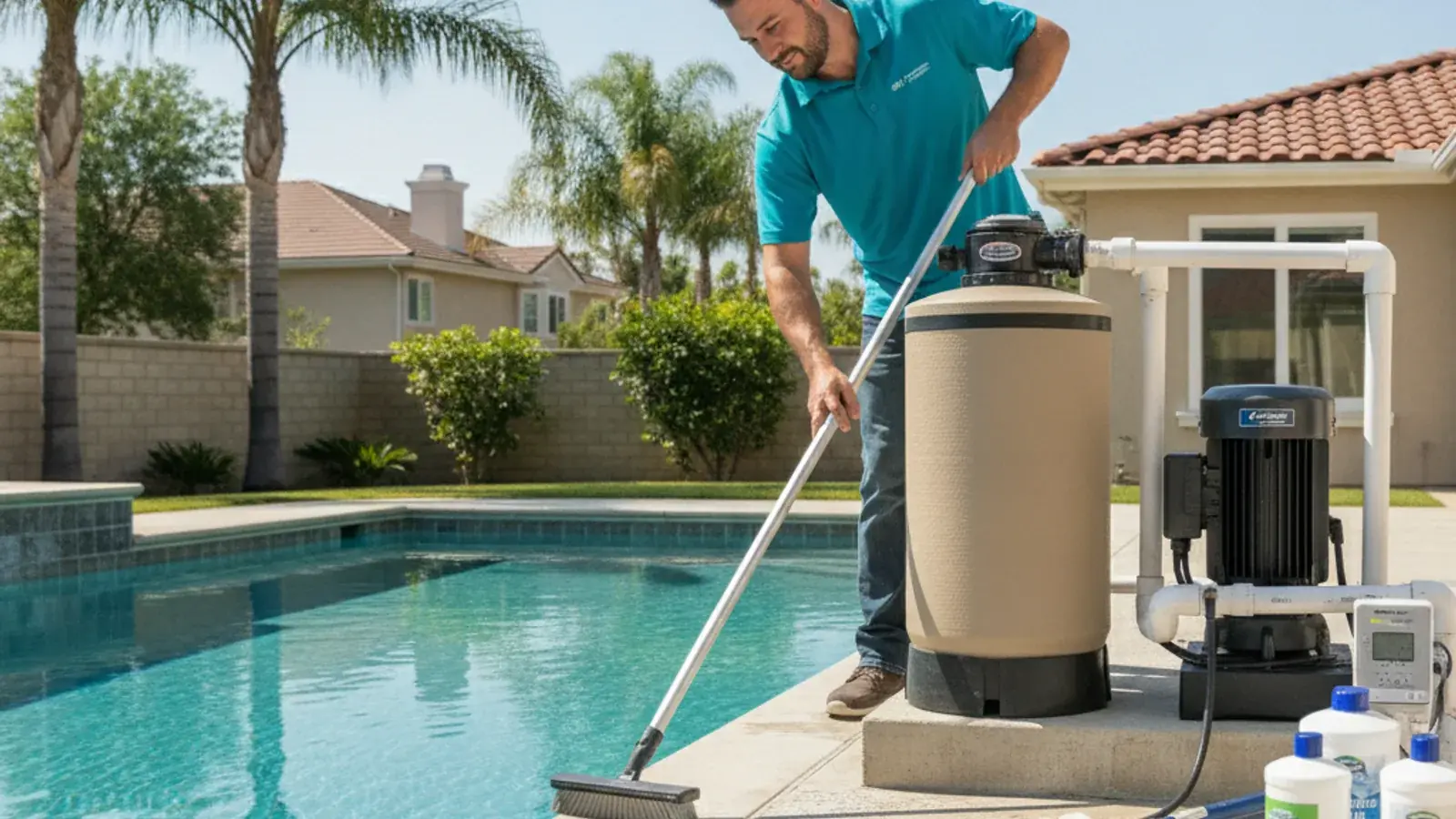
A pool zinc anode is a small sacrificial device that erodes in place of your pool’s metal components. In a saltwater system, dissimilar metals generate a tiny electrical current. That current releases metal ions into the water, which leads to erosion, plaster discoloration, and surface staining. The zinc anode absorbs that damage so your heaters, lights, and rails don’t have to.
How galvanic corrosion works in a salt pool
Salt water is conductive. When two different metals sit in that conductive environment, a small galvanic current flows between them. The less noble metal gives up ions and slowly dissolves. In a pool, that means your heater heat exchanger, light niches, and stainless steel rails are all at risk. The zinc anode is intentionally less noble than those parts, so it corrodes first.
What the anode protects
The most vulnerable components in a San Diego salt pool include:
- Heaters and heat exchangers
- Light fixtures and niches
- Automatic cover mechanisms
- Safety rails and ladders
Without a functioning anode, metal ions circulate through the water. Those ions settle on plaster and pebble finishes, leaving gray or brown stains that are difficult to remove. If you have already noticed staining, the anode alone won’t reverse it. A pool stain removal specialist can assess what is salvageable.
Bonding is what makes it work
A zinc anode only protects the full electrical circuit of your pool when it is connected to the bonding wire. A loose zinc lump dropped in the skimmer basket doesn’t provide the same coverage. The CMP Pool Defender, for example, is designed to attach directly to the bonding system. When bonded correctly, the anode shields every connected metal part in the loop.
During an equipment pad visit, the matched pro should show you exactly where the anode sits and where it connects to the bond point. If they can’t point to both, the protection may not be active.
Inspection and replacement
CMP guidance says to replace the anode once half the zinc has eroded. There is no set calendar schedule because erosion rate depends on water chemistry, salt concentration, and how many dissimilar metals are in the circuit. Check the remaining zinc each time someone services the pad.
Make the anode a priority if you already have a salt cell problem or a heater complaint. Those symptoms sometimes point to galvanic damage that a fresh anode could have prevented. Keep in mind that a new anode won’t fix a scaled heat exchanger, a failed cell, or existing plaster stains. It prevents future damage, not past damage.
San Diego specifics
Coastal areas like La Jolla, Del Mar, and Carlsbad already have salt-laden air that accelerates exterior metal corrosion. That same salt air reaches your equipment pad and compounds the galvanic process inside the plumbing. Inland pools in places like El Cajon or Poway don’t get the ocean breeze, but the galvanic issue still exists because the salt is in the water itself.
The determining factor isn’t where you live in the county. It is the condition of your anode and whether the bond is intact. If you are unsure whether your pool even has one, that is a fair question for the pro during a salt water conversion consultation or a routine equipment check.
When to call us
If your salt pool has visible metal staining, a heater that is underperforming, or you simply can’t locate a bonded zinc anode on your equipment pad, a licensed specialist should take a look. Call us at (858) 400-4404 and we’ll connect you with a licensed local pool specialist.
Frequently asked questions
Does every saltwater pool need a zinc anode?
Most salt pools benefit from one because dissimilar metals in saltwater create a small electrical current that erodes metal parts. A bonded zinc anode absorbs that erosion instead. The matched pro can confirm whether your setup already has one and whether it is still bonded correctly.
Which metal parts does a pool zinc anode protect?
Heaters, light niches, automatic cover components, and safety rails are the most vulnerable. The anode sacrifices itself so those parts do not corrode. Without it, metal ions release into the water and can stain plaster or discolor surfaces.
Does the anode have to be bonded to work?
Yes. A zinc anode only protects the full pool circuit when it connects to the bonding wire. A loose zinc lump in the skimmer does not provide the same protection. The specialist should show you the anode location and the bond point during a visit.
How often should I replace the zinc anode?
CMP guidance says replace it once half the zinc has eroded. There is no fixed calendar interval. Check the remaining zinc during routine equipment pad visits, and prioritize inspection if you notice a salt cell or heater issue.
Is a zinc anode the same as a salt water conversion?
No. A salt water conversion adds a chlorine generator, salt, and compatible equipment to your pool. A zinc anode is a corrosion-control device that protects metal parts on an existing salt system. They serve different purposes.
Need professional help in San Diego County?
Splash Pool SD connects you with a licensed specialist for any service in this post.