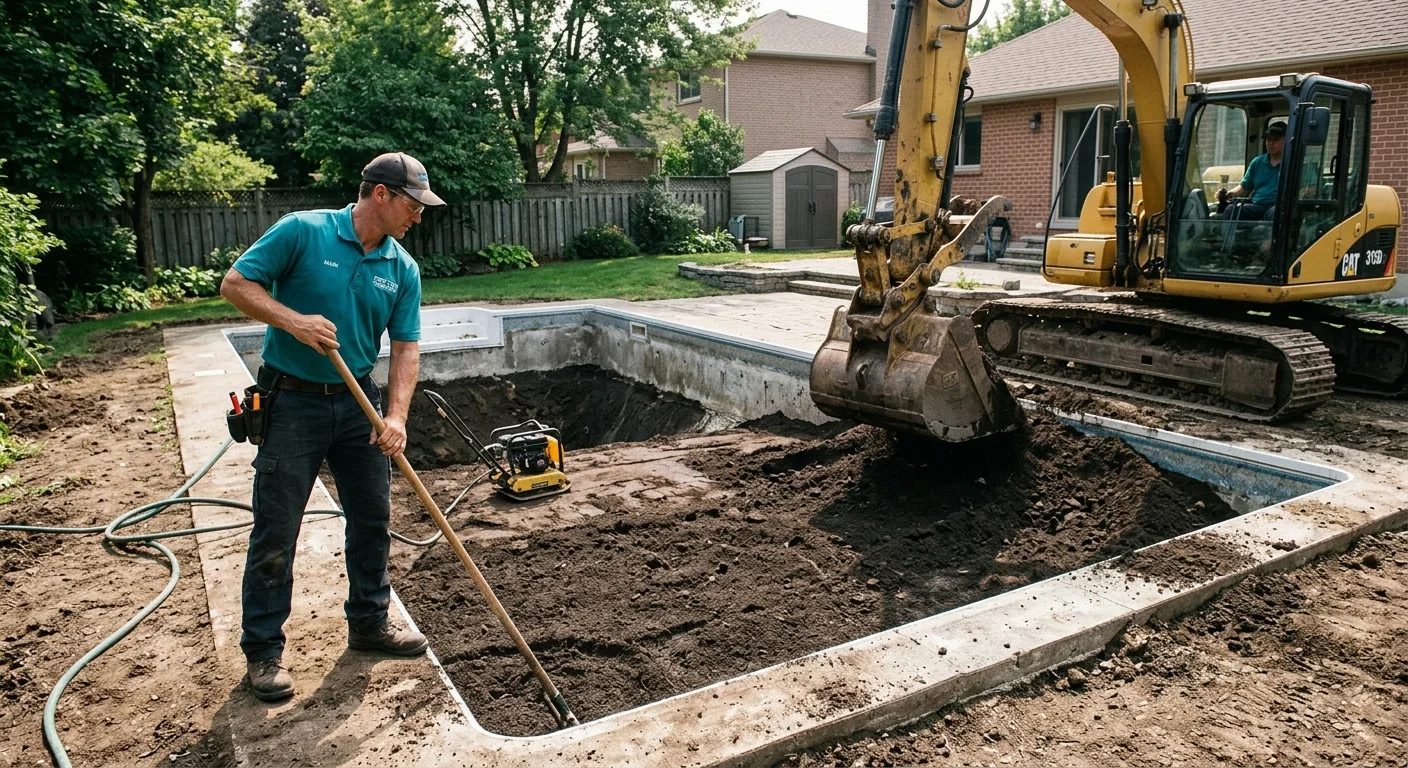
Pool removal in El Cajon means choosing a demolition method, securing the right permit, and planning what happens to the space afterward. The method you pick changes the permit path, the cost drivers, and what your yard can support in the future. Before you sign anything, you need a written scope that defines exactly what comes out of the ground, what stays, and what replaces it.
Two methods, very different outcomes
A partial fill-in breaks the pool shell into rubble, pushes the pieces into the excavation, and covers them with engineered fill. The shell fragments remain below grade. A full removal extracts the entire shell, all plumbing, steel reinforcement, and equipment from the ground. The hole is then backfilled with specified material.
These labels alone don’t tell you enough. A written scope must state which shell sections remain underground, how plumbing and electrical are handled, where removed material goes, and what replaces it. If two bids describe different end conditions, you aren’t comparing the same project.
Before you request quotes, decide what you want the space to become. A lawn, a patio, a garden bed, and a future structure all impose different requirements on fill, compaction, and drainage. Get written confirmation from your contractor that the chosen method supports your intended use.
What drives the price
Pool size, finish type, site access, equipment brand, and the permit requirement all shape what a removal costs. A tight side yard in a hillside El Cajon neighborhood presents different challenges than a flat lot with wide gate access. The matched pro quotes the full scope before work starts. No figure is meaningful until it is tied to your specific site and method.
Permit jurisdiction in El Cajon
Your mailing address alone doesn’t determine which authority issues your permit. If your property sits inside El Cajon city limits, the City of El Cajon building counter is your starting point. If you are outside city limits, San Diego County handles permitting.
When you contact the authority, describe your exact proposed method. Don’t say “pool removal” generically. Ask whether a permit is required for your specific scope, whether plans or engineering documents must be submitted, which inspections apply during the work, what records show completion and closure, and whether any requirement ties to future site use.
We couldn’t confirm a single El Cajon-specific permit rule from available sources. The correct authority for your address is the one that sets the answer.
Fill and compaction: the details that matter
“Fill and grade” means nothing without specifics. Your scope must name the proposed fill materials, state the placement method, and define how compaction is verified. Identify who provides testing, what report is issued, and what document you receive at the end.
If no testing is proposed, ask why. Bring that answer to the permitting authority or a geotechnical engineer before work begins. A future patio or structure on poorly compacted fill will settle, crack, or fail.
Drainage isn’t optional
Removing a pool changes how water moves across your lot. The pool basin once captured runoff. Once it is filled, that water has to go somewhere.
Your scope should show proposed finished elevations and explain how the new grade relates to your house, neighboring properties, fences, patios, and existing drains. Reject verbal assurances about drainage adequacy. Walk the site with each bidder. Note roof downspouts, low areas, irrigation lines, retaining features, and any standing water.
Ask which drainage conditions are included in the removal scope and which require a separate specialist. Your intended future use may change the required plans, inspections, and documents. Get the authority’s answer before demolition starts, not after.
Restoration as an alternative
A tired pool doesn’t always need removal. Stained finishes, damaged tile, worn coping, dated equipment, and visible cracks are common symptoms, but they don’t all point to the same remedy. Some are cosmetic. Some are structural. Some are mechanical.
Separate appearance from function. Assess the interior surface, the shell, the plumbing, the equipment, the deck connection, and whether the pool is losing water. Cracks require an on-site review by a licensed pool specialist, not a judgment based on photos.
If you are weighing restoration against removal, request separate written scopes for each option. A restoration proposal should list conditions found, proposed work, exclusions, and warranty terms. Compare proposals that address the same property goal. Short bids that omit permits, fill, drainage, or records are incomplete regardless of which option they describe. You can read more about signs your pool needs resurfacing and how pool restoration compares to a remodel.
Comparing bids without getting misled
Write down your property goals for the coming years before you solicit quotes. Then compare only proposals that address the same goal with the same end conditions. A bid that omits the permit, fill material, compaction testing, or drainage plan isn’t a lower price. It is an incomplete scope that will generate change orders later.
Confirm the contractor’s license through the CSLB license lookup before signing. Verify that the business name on the proposal matches the name on the license. Don’t rely on third-party badge widgets or directory listings as proof of licensing.
California law caps the down payment on a home improvement contract at the lesser of a fixed amount or a percentage of the contract price. Verify the current cap through the CSLB directly.
Minor-work exemption: when it doesn’t apply
Business and Professions Code section 7048 provides a minor-work exemption for small, casual jobs. It requires the aggregate contract price to fall below a threshold and requires that no building permit be needed. Splitting a larger project into smaller pieces doesn’t create an exemption. If your pool removal requires a building permit, the exemption doesn’t apply.
Disclosure at future sale
No specific California or El Cajon rule about disclosing a filled pool at sale was confirmed in our research. Consult a qualified California real estate professional for guidance. Keep your contract, approved plans, inspection records, fill documentation, photos, and final approval together. Ask the permitting authority which documents become part of the permanent record for your parcel.
When to call us
Pool removal involves structural demolition, permitting, engineered fill, and drainage planning. It is licensed work that requires a qualified specialist who can define the scope, pull the permit, and verify compaction. Call us at (858) 400-4404 and we’ll connect you with a licensed local pool specialist.
Frequently asked questions
Do I need a permit to remove a pool in El Cajon?
It depends on whether your property sits inside El Cajon city limits or in unincorporated San Diego County. Inside city limits, the City of El Cajon building counter handles permits. Outside, the county does. Describe your exact proposed method when you ask, not just 'pool removal,' because the scope determines the permit path. We could not confirm a single El Cajon-specific permit requirement from available sources, so check with the correct authority before scheduling work.
What is the difference between a partial fill-in and a full removal?
A partial fill-in breaks the pool shell into pieces and pushes them into the hole, then covers with fill material. A full removal extracts the entire shell, plumbing, steel, and equipment from the ground. Both methods require a written scope that specifies what stays below grade, what fill material is used, and how compaction is verified. Two bids describing different end conditions are not comparable.
Do I have to disclose a filled pool when I sell my home?
No specific California or El Cajon disclosure rule for filled pools was confirmed in our research. Consult a qualified California real estate professional for guidance on your situation. Keep your contract, approved plans, inspection records, fill documentation, photos, and final approval in a file. Ask the permitting authority which documents become part of the permanent record.
Does Splash Pool SD perform pool removal?
No. Splash Pool SD is a referral service that connects homeowners with licensed independent pool specialists. We do not perform demolition, fill work, or any physical construction. The licensed pro you are matched with handles the project from permit through completion.
Need professional help in San Diego County?
Splash Pool SD connects you with a licensed specialist for any service in this post.