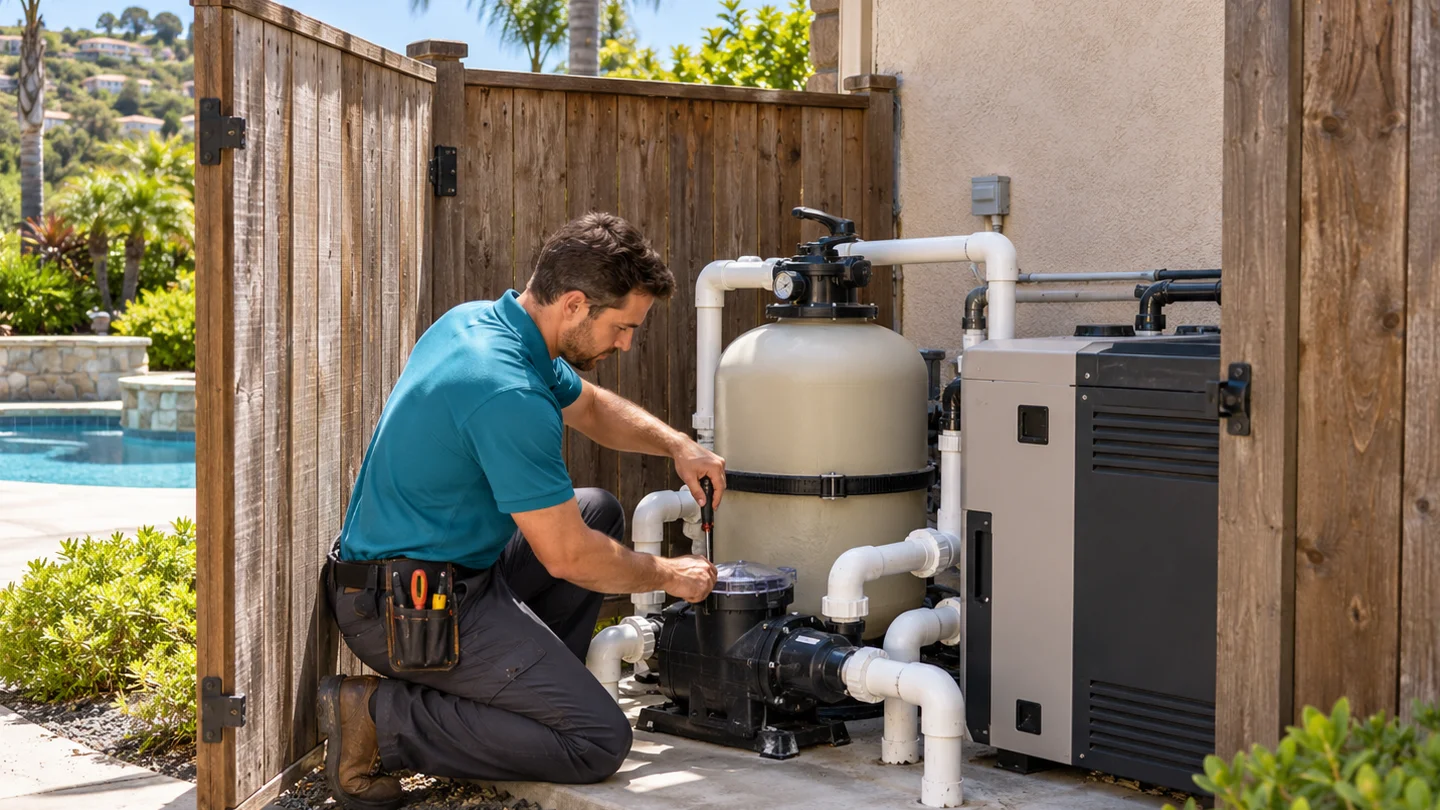
A pool equipment fence can hide a crowded pad without blocking needed access. In San Diego, the right design also accounts for coastal salt air, inland heat, drainage, and narrow side yards.
The fence should fit the actual equipment, not just the view from the patio. Before anyone builds, confirm local rules, HOA restrictions, and each manufacturer’s instructions.
Why a pad fence is not the same as a pool barrier
A pool equipment fence surrounds pumps, filters, heaters, valves, and controls. Its usual purpose is screening the pad and defining access. It isn’t automatically the barrier required around the swimming pool.
California law makes that distinction important. When a permit is issued for construction or remodeling of a pool at a private single-family home, the pool must have at least two of seven drowning-prevention safety features. An enclosure is the first listed option. That rule isn’t a blanket retrofit mandate for every existing pool.
The approved source material doesn’t include the full list or enclosure dimensions. It also doesn’t establish that a fence around pool equipment can satisfy the enclosure option. Don’t treat a decorative pad fence as a substitute. Review our guide to California pool fence law in San Diego, then confirm the current requirements with the authority handling your permit.
The location can create another practical conflict. A screen that looks good from the yard may restrict the route to the pool barrier gate. It could also crowd controls or place a gate where equipment blocks its swing. Map both systems before setting posts.
Start with the purpose of the new fence. Decide whether it needs visual screening, controlled access, noise separation, or a cleaner property line. Then keep the pool barrier review separate. This prevents one fence from being assigned two jobs without confirmation.
A matched licensed pro can review the equipment side. The applicable building counter should answer the code and permit questions. If the property belongs to an HOA, its architectural review is a separate check.
Setbacks, gates, and what HOAs usually ask for
No verified countywide setback distance for pool equipment fences appears in the approved source material. Permit requirements and property constraints can also change by jurisdiction. Ask the city building counter serving the property before choosing the fence line. For an unincorporated parcel, contact San Diego County.
Bring a simple site sketch to that conversation. Mark the property line, house wall, pool edge, equipment slab, utilities, existing barriers, and proposed gate. Include the fence material and planned height. The reviewer can then address the actual location instead of a general description.
HOA requirements aren’t confirmed by the approved materials either. Associations set their own review process and design standards. Ask the HOA what it needs before ordering panels or digging post holes. The request may involve plans, colors, finish samples, or a contractor proposal, but only the HOA can confirm its current list.
Gate planning deserves equal attention. A tight side-yard pool equipment pad may have little room for a swinging panel. Older tracts in central San Diego and nearby communities can leave equipment between a house wall and a side boundary. A gate that opens on paper may hit plumbing, a wall, or stored items on site.
Walk the replacement path as well as the daily service path. A pro needs to reach valves, controls, filters, and heater panels. Larger components may eventually need to leave the pad. A narrow decorative opening can turn that future job into fence removal.
Don’t copy a neighbor’s layout. Their lot line, HOA, equipment, and jurisdiction may differ. Confirm your own plan with the building counter and HOA before work begins.
Heat, salt air, and access the pro still needs
San Diego exposure changes across the county. A pool equipment enclosure near Encinitas, Carlsbad, or Point Loma may face salt-laden coastal air. An inland pad around El Cajon or Escondido can sit in stronger afternoon heat. The enclosure should reflect the pad’s actual setting.
Solid walls can change airflow around equipment. The approved materials don’t provide universal ventilation openings or clearance distances. Those details depend on the installed models and their manufacturer instructions. Have the licensed pro identify every required access area before selecting panels.
Start by locating the working side of each component. Filters may need space around their closures. Pumps have lids, controls, and plumbing connections. Heaters have model-specific service and airflow instructions. Automation panels and shutoffs must remain reachable. The fence plan should be drawn around those points.
A removable panel can help where a permanent gate can’t create a useful replacement path. The fasteners and removal method still need to suit the site. Don’t assume a panel is accessible if plants, storage, or a neighboring wall blocks it.
Drainage matters too. Fence posts and lower rails shouldn’t hide an existing standing-water problem. Water collecting beside equipment deserves attention before the enclosure covers the view. Our guide to standing water around a San Diego pool equipment pad explains what to inspect and discuss with a pro.
Shade also needs care. Screening the pad from direct sun may sound helpful, but a roof or close overhead cover changes the enclosure. Manufacturer instructions and local requirements still control the final arrangement.
Photograph the pad from every side before design begins. Include labels and service panels. Those photos help the pro spot access conflicts before posts narrow the space.
Materials that hold up on a San Diego pad
There isn’t one approved material for every San Diego pool pad. Wood, vinyl, aluminum, composite panels, and masonry each create different maintenance, access, and installation questions. Choose by site conditions and documented product requirements, not appearance alone.
Wood can match an existing yard fence and is easy to customize. Ask how the selected boards, posts, hardware, and finish should be maintained at that location. Don’t rely on an unsupported lifespan promise.
Vinyl can create a consistent privacy screen. Inland heat and direct sun make product specifications important. Ask the supplier about the chosen panel, color, post system, and exposure. Leave enough room for equipment access and follow the manufacturer’s installation directions.
Metal systems can provide narrow framing and clean lines. Coastal properties should pay close attention to the full assembly. Panels aren’t the only parts exposed to salt air. Hinges, latches, screws, brackets, and cut edges also deserve review. Ask for care instructions tied to the actual products.
Composite panels vary by manufacturer. Confirm how the system handles gates, post spacing, heat, cleaning, and replacement sections. A product sample can reveal its color and texture better than a screen image.
Masonry creates a more permanent enclosure. It can also make later access changes harder. Its footing, location, and permit questions should be resolved before construction. No universal setback or permit answer could be confirmed from the supplied material.
Whatever material you choose, inspect the gate hardware closely. A handsome panel system becomes frustrating when its gate sags or blocks the working side of the pad. Plan the latch position, swing direction, and removable access while the equipment is fully visible.
For a broader equipment plan, review pool equipment installation and upgrades and our pool equipment pad layout guide. The enclosure should follow the pad layout, not force the equipment into an awkward arrangement.
What to confirm with the city before anyone builds
San Diego County contains multiple cities plus unincorporated areas. No single permit answer should be applied across all of them. The approved source material doesn’t confirm a fence height, setback, gate dimension, or permit fee for this project.
Contact the building counter for the jurisdiction serving the property. Give staff the parcel location and describe the work as an enclosure around pool equipment. Explain whether it includes posts, masonry, electrical changes, gas equipment, a roof, or alterations to the existing pool barrier. Ask which current documents govern the plan.
Use a written checklist:
- Does this enclosure require a permit at this address?
- Are there property-line or equipment setbacks to review?
- Does the proposed location affect the existing pool barrier?
- Are there restrictions tied to utilities or recorded easements?
- Does a roof or solid wall change the review?
- What plan details must the applicant provide?
Record the department’s answer and the date. Rules and forms can change, so current written guidance is more useful than a neighbor’s past experience.
Also confirm who will perform each part. California’s minor-work exemption applies only when the aggregate contract price is less than $1,000, the work is casual or minor, and no building permit is required. The threshold took effect January 1, 2026. Splitting a larger job into smaller contracts doesn’t create the exemption, and someone advertising as a contractor loses it at any price.
For work requiring a contractor, verify the person or business through the CSLB license check. Check the record yourself and make sure the proposed work matches what the contractor will handle.
Finally, compare the city answer, HOA approval, equipment manuals, and site plan. Resolve conflicts before materials arrive.
When to call us
Call when a pool equipment fence could restrict service access, ventilation, drainage, or future equipment replacement. Call us at (858) 400-4404 and we’ll connect you with a licensed local pool specialist.
Frequently asked questions
Is a pool equipment fence the same as a pool safety barrier?
No. An equipment fence screens the pump, filter, heater, and related components. Don't assume it meets the rules for an enclosure around the pool itself. Confirm the current requirements with the building authority for your property.
Does a San Diego pool equipment enclosure need a permit?
Permit requirements depend on the property, jurisdiction, enclosure design, and work involved. The approved source material doesn't confirm one countywide rule. Ask the applicable city building counter, or San Diego County for an unincorporated property, before construction.
What material works for a pool equipment fence near the coast?
The choice depends on exposure, maintenance, appearance, and the equipment manufacturer's access requirements. Near the coast, ask how every panel, post, fastener, hinge, and latch is intended to handle salt air.
How much access should a pool pad gate provide?
There isn't one verified width that fits every pad. The opening should be planned around the actual equipment, service points, gate swing, and any future replacement path. Confirm the final layout with the matched licensed pro.
Need professional help in San Diego County?
Splash Pool SD connects you with a licensed specialist for any service in this post.