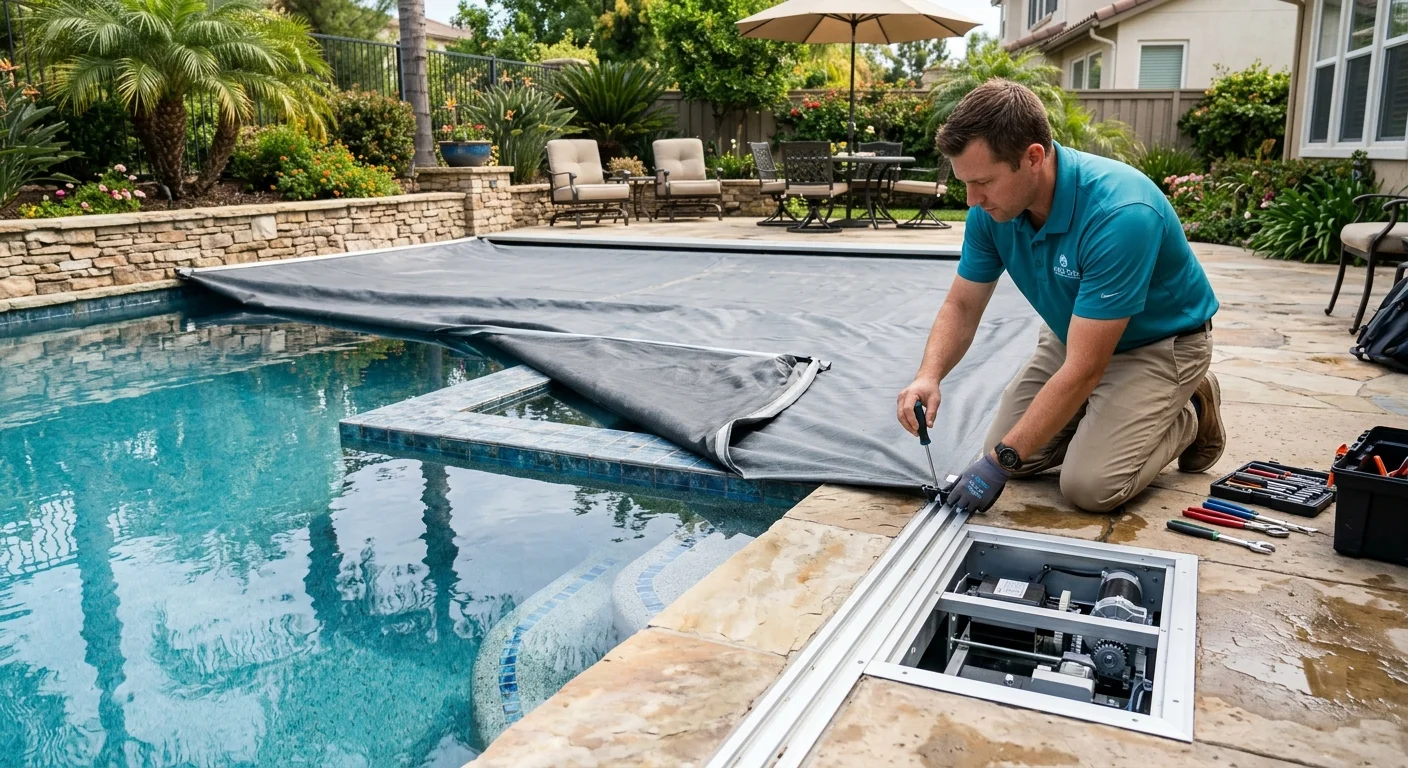
A pool cover that binds, sags, or won’t respond isn’t just inconvenient. It can be a safety problem, especially with automatic and anchored safety covers. In San Diego County, salt air on the coast and dry dust inland both accelerate wear on tracks, fabric, and hardware. The right fix depends on the cover type, the manufacturer, and how far the damage has spread. A licensed local specialist inspects the fabric, hardware, controls, and deck before ordering anything.
Automatic covers: symptoms and diagnosis
An automatic cover uses a powered drive to move fabric through tracks on either side of the pool. When something goes wrong, the symptoms overlap. Uneven travel, loose fabric, a stalled edge, unusual noise, and unresponsive controls can all point to different root causes. Multiple connected parts share these signs, so replacing the first suspicious component may not fix the issue.
A proper inspection covers both tracks, the alignment of the leading edge, ropes or cables, pulleys, drive parts, controls, and the housing. Terminology varies by manufacturer, so the model label matters. If you can read it, photograph it before the specialist arrives.
Common causes of binding and stalling
Uneven travel usually means resistance on one side or a fault in the pulling system. Start-stop behavior often traces to track debris, a displaced part, or tangled ropes. Control faults can mimic mechanical failures entirely. The key rule: never keep cycling a binding cover. Each forced cycle can worsen the damage.
Before the specialist arrives, note whether the problem happens during opening or closing, which side leads, and whether you hear the motor or mechanism. Inspect the housing lid, mounting points, and deck edge. A damaged lid or altered deck can affect how the system seats.
When controls overlap with automation
Cover controls sometimes sit near a larger automation panel. If your pool has an integrated system, motor or control work may overlap with equipment upgrades. The specialist should clarify whether the cover controller is standalone or tied to a broader panel. For more on automation options, see our guide to pool automation systems in San Diego.
Safety covers: function and inspection
An anchored safety cover is a drowning-prevention feature, not a cosmetic accessory. Torn fabric or failed straps represent a real safety concern. Control pool access while the condition is being evaluated.
Inspection should cover the entire perimeter, not just the visible tear. Compare strap tension across all attachment points and note any that are stretched. Anchors may be loose, tilted, stuck, or missing entirely. A generic patch doesn’t restore rated performance.
Manufacturer identification and compatibility
Identify the maker and model when possible. The manufacturer may specify approved panels, straps, and springs. If the cover is unidentifiable, request a written compatibility explanation before accepting any repair. Our post on choosing a pool repair pro in San Diego covers what to look for in that conversation.
California drowning-prevention law
California Health and Safety Code §115922 requires at least two of seven approved drowning-prevention features at permit issuance for new construction or remodel of single-family private pools. This isn’t a blanket retrofit requirement for existing pools. San Diego, Chula Vista, and Oceanside each administer their own building department requirements. Check the current text of the statute and confirm specifics with your local building department. For related safety requirements, see our post on California pool fence law in San Diego.
Solar covers: inspection and limitations
Solar covers are lighter and moved by hand or reel. The first diagnostic step is separating cover damage from reel damage. Torn material on a sound reel is a different problem than a bent tube.
Lay the cover flat and look for splits, thinning, and damaged edges. Attachment points may pull through the material. A small isolated tear may have an approved fix from the manufacturer. Widespread damage means patching is insufficient.
For the reel, check that the tube is even, the stands are stable, and the straps are aligned. Confirm fasteners are present and the reel hasn’t shifted. Photograph everything before moving loose components.
Pool shape and deck layout affect how a solar cover performs. Rectangular pools, freeform shapes, raised spas, narrow yards, and step configurations all exist across San Diego County. A solar cover isn’t a safety cover in function. If the label is unreadable, contact the maker or a specialist before attempting a fix. For a broader look at cover options, see our post on pool covers in San Diego.
Local environmental factors
Coastal areas like Encinitas and Point Loma expose cover hardware to salt film and grit. Inland areas like Poway and El Cajon push dry dust into tracks and housings. Both accelerate wear but in different ways. Photos of the cover, its label, the deck edge, and the failure area help the specialist prepare before arriving.
Repair versus replacement
Repair is strongest when damage is isolated and parts are available. Replacement becomes the better path when multiple parts are failing at the same time.
For automatic covers, that threshold is usually fabric damage combined with track wear, pulling-system failure, and housing damage. It also applies when the system is unidentifiable or no longer supported by the manufacturer.
For safety covers, widespread stitching failure, multiple stretched straps, or a poor fit means the cover can’t perform its rated function. A planned remodel that changes coping, decking, or pool shape also points toward replacement.
For solar covers, reel straps won’t fix a failing panel, and a new panel alone won’t fix a bent or unstable reel. Request separate written options for both repair and replacement so you can compare. Our guide on pool equipment repair estimates walks through what a clear proposal should include.
What shapes the price
There is no standard rate for pool cover repair. The quote depends on cover type, manufacturer, dimensions, deck access, parts availability, and overall condition. Ask the specialist to identify the root cause, list required parts, and separate repair from replacement in the proposal. The matched pro quotes before work starts. Warranty terms come from that independent specialist, not from Splash Pool SD. Get those terms in writing.
Before signing anything, verify the contractor through the CSLB license lookup and match the license name to the written proposal. Our post on checking a pool contractor license in California explains the steps.
When to call us
A binding automatic cover, a torn safety cover, or a solar reel that won’t hold tension all need a licensed specialist who can diagnose the full system before ordering parts. Splash Pool SD connects you with local pros who carry the right licenses and know San Diego County’s conditions. Call us at (858) 400-4404 and we’ll connect you with a licensed local pool specialist.
Frequently asked questions
What are the most common failure points on an automatic pool cover?
Uneven travel, loose fabric, a stalled edge, and unresponsive controls are the most frequent symptoms. Track debris, displaced pulleys, tangled ropes, and control faults all share these signs, so a full inspection of both tracks, the leading edge, and the drive mechanism is needed before ordering any part.
Can a torn safety cover be repaired instead of replaced?
A small, isolated tear may have an approved fix from the manufacturer. Widespread stitching failure, multiple stretched straps, or a poor fit means the cover no longer performs its rated function and replacement is the safer path. A generic patch does not restore rated performance.
Does a stuck automatic cover always need a new motor?
No. Track debris, a displaced part, or a control fault can mimic a motor failure. Cycling a binding cover repeatedly can cause further damage, so stop operating it and have a specialist inspect the tracks, ropes, pulleys, and controls before assuming the motor is the problem.
What factors drive the cost of pool cover repair in San Diego?
Cover type, manufacturer, dimensions, deck access, parts availability, and overall condition all shape the quote. There is no standard rate. Ask the matched specialist to identify the cause, list required parts, and separate repair from replacement options in writing before work starts.
Need professional help in San Diego County?
Splash Pool SD connects you with a licensed specialist for any service in this post.