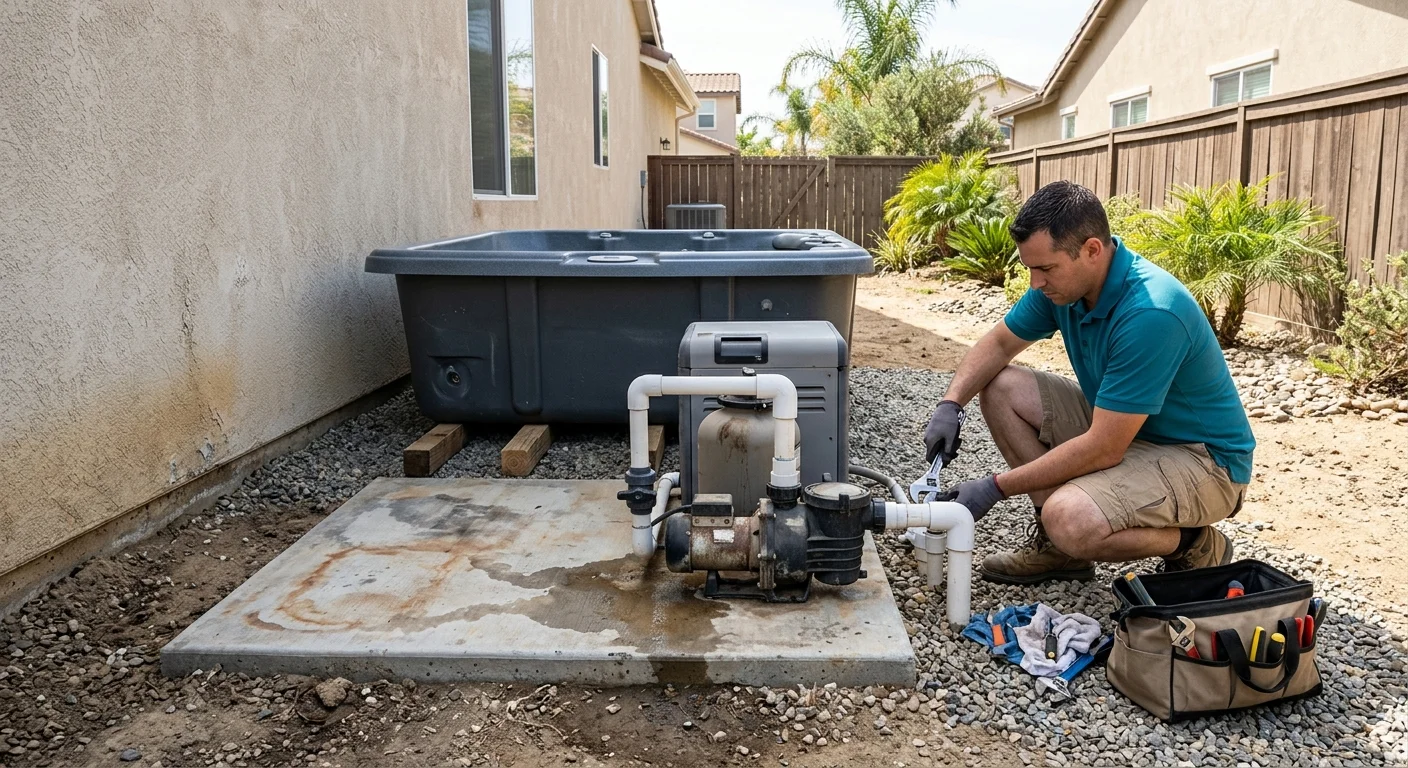
The spa on a Clairemont pad or a Carlsbad deck has sat idle through another dry summer. The cover is brittle, the cabinet is soft at the base, and you want that square of yard back. Hot tub removal is the teardown of a wired, plumbed shell in a San Diego side yard that was never built as a loading dock. A licensed local pro, and the electrician or plumber they bring, has to make the utilities safe before anyone moves the shell.
People type Jacuzzi removal when they mean a portable spa. The job is the same family of work either way. It is still a different job from tearing out a gunite spillover tied into a pool.
What removal includes besides hauling the shell
Hauling is the last step. The work starts with a walk of the path: side gate in North Park, alley in Pacific Beach, hillside stairs in La Jolla, or a wide driveway in Santee. The matched pro looks at the shell, the cabinet, the cover, the equipment pack, and anything built around the spa.
A portable spa is an acrylic or fiberglass shell packed with foam, jets, and a pump-and-heater pack. It usually sits on a concrete pad or in a cutout in a wood or composite deck. An inground spillover spa is part of the pool. It shares plumbing, a bond wire, and often the same plaster or pebble finish. If that is what you have, stop thinking of it as a pickup. It is closer to pool removal in San Diego than to rolling a cabinet through a gate.
Water has to leave the vessel before anyone cuts or lifts. San Diego spas hold a lot of chemically treated water. Do not dump it in a gutter. The storm system here runs to creeks and the ocean. Ask the matched pro where drained water can go, and check San Diego County Water Authority guidance if you are unsure how your property is supposed to handle outdoor water.
Then comes the shell. Some portable spas roll out whole on dollies once the cabinet and pack are off. Tight Encinitas and Mission Hills side yards often force the opposite: the pro cuts the shell into sections so pieces clear a 36-inch gate without chewing the stucco. The cover, the foam, the pumps, and the plastic plumbing all leave with the shell. A stained pad, a ring of dead grass, and whatever the deckers built around the spa stay until you add that work to the scope.
If the shell is sound and you would rather keep soaking than lose the pad, start with spa and hot tub repair. A dead heater or a leaking pack is a repair conversation. A rotten cabinet, a cracked shell, or a deck that has started to sag under the spa is a removal conversation.
Gas, electric, and plumbing a licensed pro disconnects
Many San Diego portable spas sit on a dedicated electric circuit. Some also have a gas line to a heater. A few share water with a nearby hose bib or a pool fill line. Cutting any of that is trade work. Splash Pool SD matches you with licensed independent pros. We do not cut gas, pull wire, or cap pipe.
The specialist on site, or the electrician and plumber they bring, should kill power at the breaker, confirm the circuit is dead, and disconnect the spa. The line that remains needs a proper cap or removal back to a safe point, not a wrap of tape in a wet box. Gas is stricter. If you smell gas, leave the yard and call SDG&E. Do not open fittings yourself. A licensed plumber or the gas utility makes that line safe.
California treats contracting without a license as a misdemeanor unless an exemption applies. Work is exempt only when the whole job is under $1,000 and no building permit is required, a threshold that took effect January 1, 2026. Splitting a job to stay under that number does not create an exemption. Anyone who advertises as a contractor loses the exemption at any price. Look up the person who shows up on the CSLB license check.
A portable spa lifted off a pad may need no permit in some cities. Moving electrical, cutting gas, breaking concrete, or demolishing an inground spa often does. This site could not verify a single countywide permit price or a one-rule-fits-all process. Confirm with the City of San Diego building counter, or with the building department in Chula Vista, Oceanside, Escondido, or wherever the house sits, before work starts.
If you sign a home improvement contract, California caps the down payment at $1,000 or 10 percent of the contract amount, whichever is less. On a larger job the cap is $1,000, not 10 percent of the total.
Access, decks, and HOA rules that change the job
Access is the quote. A spa in an East County backyard with a gate off the driveway is one kind of day. A spa on a Point Loma or Mount Helix terrace, with a narrow stair and a plaster wall, is another. Coastal north county lots in Leucadia and Solana Beach often bury the spa in a deck that has to come apart before the shell can move. Inland tract homes in Otay Ranch and Rancho Peñasquitos usually have a gate, and the fight is the turn at the corner of the house.
Decks change the scope twice. First, the crew has to protect or open the deck to get the spa out. Second, a cutout in redwood, ipe, or composite stays as a hole when the shell is gone. Deck repair is separate work unless the quote says it is included. Salt air along the coast rots cabinet bases and joists. Inland heat in Escondido and El Cajon cooks covers and dries wood until it splits. Both conditions show up after the spa leaves.
HOAs are common in Carmel Valley, 4S Ranch, Rancho Bernardo, Scripps Ranch, and Eastlake. Architectural committees care about what the backyard looks like from a neighbor’s second story. They may want notice before a spa leaves, and they may have rules for what replaces it: hardscape, planting, or a new unit. Read the CC&Rs. A specific countywide “5 foot rule” for hot tubs could not be confirmed from the sources this site uses. Setbacks and electrical clearances are city and HOA questions. Ask before you leave a vacant pad or set a replacement.
Searchers also ask why people get rid of a spa. In San Diego the usual story is simple. The heater died after a quiet winter. A leak stained the pad. The deck under the cabinet started to move. The house is going on the market and the next owner does not want the maintenance. Or the spa still runs and the family wants lawn, a fire pit, or a play area instead. Unused water in the sun is a chemistry chore, and spa and hot tub service only makes sense if you still use the water.
What happens to the pad, bond wire, and fill lines
When the shell is gone you still have a pad. It is often a small rectangle of stained concrete with bolt holes, a buried conduit stub, and a copper bond wire that once tied the spa to the equipment. The matched pro should tell you, in the quote, whether that pad stays, gets broken out, or gets ground flush.
Bonding is easy to miss and expensive to guess about. A copper wire often loops from the spa, the pad steel, and nearby metal. Cutting it without a plan can leave a raw conductor in damp soil. Leaving it can put a trip hazard at grade. This site does not publish a code recipe for what to do with that wire on a residential spa pad. The licensed pro on the job, and the city if a permit is in play, decide what stays, what gets capped, and what gets removed.
Fill lines and drain lines need the same honesty. A hose bib that used to feed the spa can stay. A buried fill tied into irrigation or pool plumbing should be capped so it cannot weep under the pad. An old gas stub should be capped by the person qualified to touch gas, not left as an open thread in a flower bed.
Inground spillover spas leave a hole, not a pad. Backfill, compaction, and what you plant or pave on top are part of that conversation. So is the pool on the other side of the wall. Taking the spa and leaving the pool means the remaining vessel still has to hold water, keep its bond, and meet whatever the city requires when a permit is issued for construction or remodel of a pool at a private single-family home. California requires at least two of seven drowning-prevention safety features when that permit is issued. The first item on that list is an enclosure. Confirm the current rule with the city. Do not treat a spa demo as a way to skip pool safety work.
Plan the surface you want before the crew leaves. A stained pad with conduit stubs is a finished job only if you asked for the spa to disappear and nothing else.
How to compare removal quotes without a guessed price
Splash Pool SD publishes no price list for hot tub removal, and no dump fee, crane charge, or permit figure appears here because none of those numbers were verified for this page. A quote is a conversation after the pro sees the spa, the path, and the utilities.
Compare scope, not a round number someone guessed on the phone. A useful quote names the spa type (portable cabinet or inground spillover), the access path, whether the shell leaves whole or in sections, who disconnects electric and gas, who drains the water and where it goes, whether the pad stays, what happens to the bond wire and stubs, whether deck repair is included, and who hauls the debris. If a line is missing, it is not in the job.
Ask how the debris leaves the property. Some San Diego yards will not take a whole shell through the gate. Cutting on site makes more pieces and more foam. The quote should say who owns disposal and that the yard will be left broom-clean. Recycle metal and motors when the hauler can. Confirm landfill and recycling rules with the crew. This site could not verify a county rule that every landfill will take a whole spa.
If two quotes are far apart, the cheap one is often missing gas, electrical closeout, or pad work. The dear one may be pricing a crane on a hillside lot you can actually walk out with a cut shell. Walk the path with each bidder. Take photos of the gate, the meter, the gas stub, and the underside of the cabinet.
Look up every license on the CSLB site before you sign. Confirm the down-payment cap above. Get the scope in writing. The matched specialist quotes after seeing your yard. The website cannot.
When to call us
Call when the spa is past repair, the utilities are still live, or the path out of the yard needs a licensed crew rather than two neighbors and a truck. Inground spillover spas, gas lines, and bonded pads are that kind of work. Call us at (858) 400-4404 and we’ll connect you with a licensed local pool specialist.
Frequently asked questions
Can two people move an empty hot tub?
Two people can sometimes slide a small, drained portable spa a few feet on a dolly. They rarely get it through a San Diego side yard, over a fence, and onto a truck without hurting the gate, the stucco, or themselves. Ask the matched licensed pro whether the shell can roll out whole or has to come apart in sections.
What is the 5 foot rule for hot tubs?
A single countywide 5 foot rule for hot tubs could not be confirmed from the sources this site uses. Setbacks, electrical clearances, and spa placement rules vary by city and by HOA. Ask the City of San Diego building counter, or your own city's building department, and read your CC&Rs before you set a new spa or leave a vacant pad.
Do I need to drain the spa before a pro arrives?
Ask the matched pro before you open a valve. Treated spa water should not go into a San Diego gutter or storm drain. The specialist will tell you where the water can go, and whether they will drain it as part of the job.
Is hot tub removal the same as taking out a pool?
A portable spa on a pad is a different job from an inground spillover spa tied into a pool. If the vessel is built into the pool, read our pool removal guide and treat it as pool work, with the plumbing, bond, and fill that come with that.
Should I repair the spa instead of removing it?
If the shell is sound and the pad is dry, a heater, pump, or leak repair can keep the spa in service. Removal makes more sense when the cabinet is rotten, the shell is cracked, the deck underneath is failing, or you want the yard back.
Need professional help in San Diego County?
Splash Pool SD connects you with a licensed specialist for any service in this post.