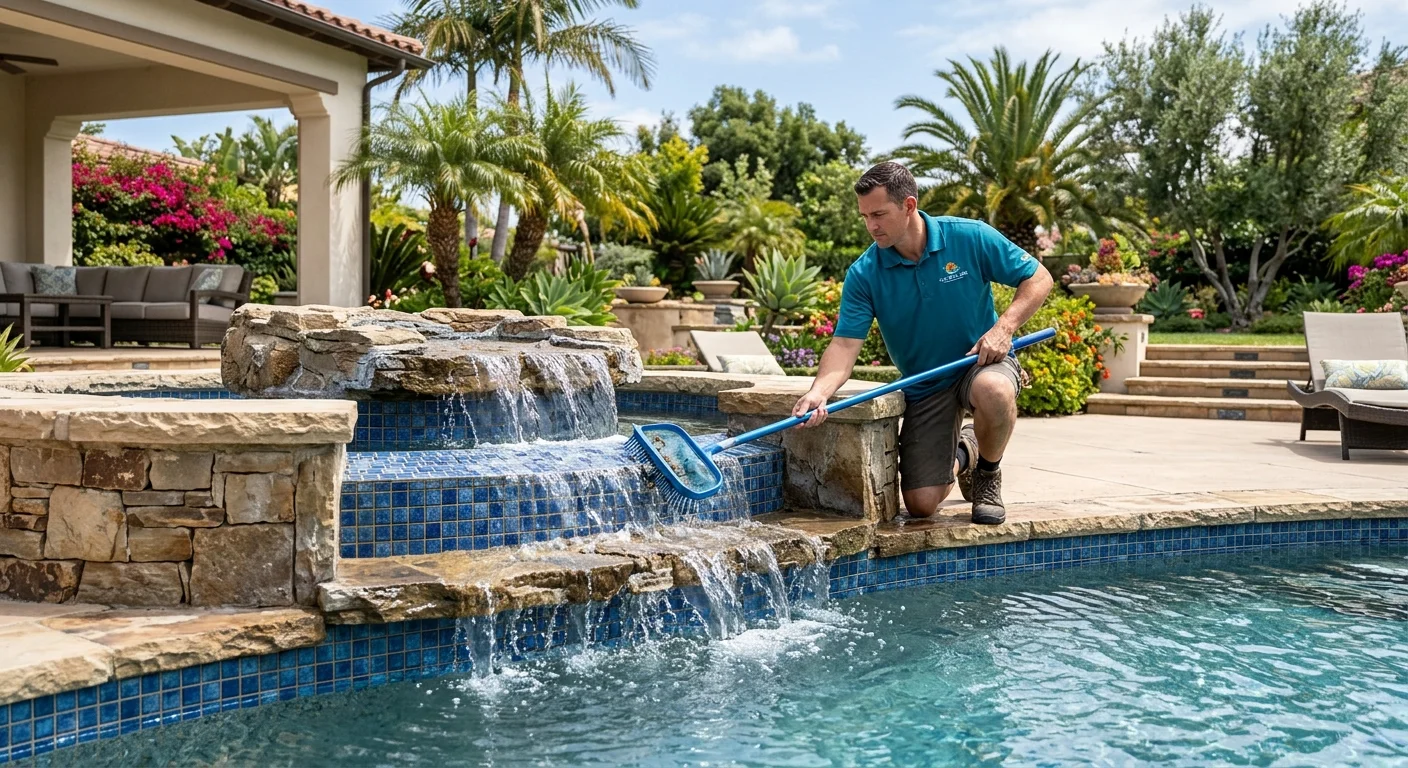
Fountain and water feature repair in San Diego starts with one question: does the feature connect to your pool system or run on its own? That answer determines who fixes it, what gets inspected, and where the problem likely lives. Splash Pool SD connects homeowners with licensed local pool professionals for pool-integrated water features like spa spillways, sheer descents, deck jets, and tiled walls. If your feature is a standalone courtyard fountain with its own basin and pump, you need a fountain restoration company instead.
Standalone vs. pool-integrated features
A freestanding fountain recirculates water from its own basin. The pump sits inside the basin or in a nearby equipment enclosure. It has its own intake, filter screen, nozzles, lighting, and controls. When something goes wrong, the problem usually stays contained unless a shared utility or drain is involved.
Pool-integrated features are different. A raised spa spillway, a sheer descent, a deck jet, or a tiled wall may use a dedicated pump, or it may rely on your pool pump, valves, automation, and return plumbing. Weak flow at the feature can originate well beyond the visible fountain. That means the repair path is longer and the diagnosis requires someone who understands the full pool system.
This distinction matters because it changes what gets inspected. A standalone unit needs its basin, pump, and controls checked. A pool-tied feature needs valves, plumbing runs, automation settings, and the pool pump itself evaluated. A shared equipment fault may require pool repair before the fountain works again.
Flow problems and clogs
Flow issues range from one uneven nozzle to a completely still basin. The pattern narrows the inspection scope quickly.
If a single outlet sprays crooked or weak, the nozzle is likely blocked. Leaves, grit, and loose decorative material collect at openings. Mineral residue narrows small nozzle passages over time, especially in areas with hard water. San Diego’s water supply is high in dissolved minerals, and that buildup shows up on features faster than on pool surfaces. Our post on hard water and San Diego pools covers why this happens.
If all outlets are weak, the problem sits upstream: intake, pump, valves, or supply path. Low basin level causes the pump to struggle on draw. Low level itself has several causes: splash-out, a fill problem, or a leak. Repeated refilling hides the underlying pattern.
Record the pump sound before the pro arrives. Silent, humming, cycling, or running without flow each point somewhere different. Note whether the problem began after cleaning, landscaping, equipment work, or a control change.
Never force wire, drill bits, or sharp tools into nozzles. Small openings and finished surfaces mark easily. A specialist removes the nozzle and checks the passage from both sides. The goal is to confirm water reaches the pump, passes through it, and exits the outlets. That prevents mistaking a hidden blockage or valve issue for a failed motor.
Leaks
Frequent refilling warrants a closer look. Water exits through the basin, a fitting, concealed plumbing, or overspray. Record whether the level falls when the feature is off, running, or both. Look for damp soil, lifted finish, or moisture near equipment.
Water may travel beyond the intended catch basin. Don’t assume the closest wet spot marks the source. Water follows joints and hidden surfaces before it appears. For standalone features, a pro checks penetrations, drains, liners, seams, and pump connections. Pool-integrated features add shared valves and buried lines to the list.
A spillway sends water outside the pool if flow is uneven. Wind changes the landing point. If both the basin and pool level are affected, note that before the visit. It may signal a broader plumbing assessment rather than a surface patch. A visible crack doesn’t automatically prove where the leak is. A specialist isolates sections and compares operating conditions to separate a basin problem from a line or fitting problem.
Keep a short log rather than guessing daily loss. Same-angle photos document the waterline without inventing a measurement. The San Diego County Water Authority is a useful regional resource if you want context on water use.
If you are unsure whether you have a leak or normal evaporation, our guide on pool leak vs. evaporation in San Diego walks through the difference.
Lighting and controls
Lighting failure may appear alone or alongside a flow problem. One dark fixture and an entirely inactive feature point down different paths. Record what you see: dark, flickering, wrong color, or unresponsive to the controller.
If a scheduled feature works manually but not on its program, that is an automation issue. The difference separates fixture, connection, control, and automation faults. Pool-integrated features share their control area with the pool pump, spa mode, and landscape lighting. Don’t reset schedules before recording current settings. The original behavior helps the specialist trace the fault.
Standalone features may have a separate timer, controller, transformer, or switch. Share visible manufacturer and model information with the pro. Clear photos are more useful than guessing which component failed. Show moisture in the lens, damaged housings, loose fittings, or altered wiring as you found them.
Don’t treat a water-feature light as a dry-location bulb change. A pro identifies the equipment and explains repair options. Control upgrades sometimes come as part of a larger yard project. If your pool equipment is aging, a control upgrade may make sense at the same time.
Scale and staining
White crust, dark streaks, and discolored grout change the appearance of a feature. Not all of these require the same cleaning method.
Scale collects where water crosses an edge or evaporates from splash. It is most noticeable on tile lines, spillway lips, nozzles, and textured stone. Buildup can change a narrow stream or create an uneven sheet. Color alone can’t identify every deposit. A white mark might be surface residue, exposed worn material, or construction carryover. Brown, green, and dark staining each have several possible sources.
The underlying material affects treatment. Tile, stone, plaster, metal, and grout each respond differently. A glazed tile approach is unsuitable for natural stone or a delicate finish. A small test area shows how the material responds before full treatment begins.
Photograph the surface dry and while water is flowing. Dry images show texture and edges. Operating images show concentration, misses, and persistent wet bands. Repair may combine cleaning with flow correction. Removing residue without fixing a misaligned nozzle leaves the same pattern returning. Adjusting flow won’t restore an already stained finish. Treat appearance and operating cause as separate decisions.
Local patterns across the county
North Park tends toward compact courtyards with small standalone basins. Rancho Bernardo and Chula Vista more often have larger yards with multiple features sharing an equipment area. The layout affects diagnosis. A shared equipment pad means one fault can affect several features at once.
Photos of the basin, equipment, controls, and the operating feature help the specialist prepare. Note whether the problem affects only the fountain or also the pool. Pool circulation, pump behavior, and water level changes all matter. A shared equipment fault may require pool repair before the fountain itself is addressed.
Before hiring anyone, check the CSLB license lookup. The online lookup is more reliable than a badge in an advertisement.
When to call us
If your pool-tied water feature loses water, won’t circulate, shows uneven flow, or has lighting and control problems, a licensed pool professional should inspect it. Splash Pool SD matches you with a local specialist who handles spa spillways, sheer descents, deck jets, and tiled walls.
Call us at (858) 400-4404 and we’ll connect you with a licensed local pool specialist.
Frequently asked questions
Who handles fountain repair in San Diego?
It depends on the feature type. Standalone courtyard fountains with their own basin and pump need a fountain restoration company. Pool-integrated features like spa spillways, sheer descents, deck jets, and tiled walls need a licensed pool professional. Splash Pool SD connects homeowners with licensed specialists for pool-tied water features.
Why did my fountain stop flowing?
Common causes include a blocked intake, clogged nozzle, low basin level, a closed valve, a control problem, or pump failure. A specialist inspects the full water path before recommending a repair, so the real cause gets identified rather than guessed.
How do I tell if my water feature has a leak?
Record when the water level falls and whether the feature is running or off. Note damp soil, lifted finish, or moisture near equipment. A specialist compares operating conditions, inspects the basin, fittings, plumbing, and pool system to isolate the source.
Can scale and staining on my fountain be removed?
Often yes, but the correct treatment depends on the deposit type and the underlying surface material. Have both the residue and the surface identified before approving any cleaning. A method safe for glazed tile may damage natural stone or a delicate finish.
Need professional help in San Diego County?
Splash Pool SD connects you with a licensed specialist for any service in this post.