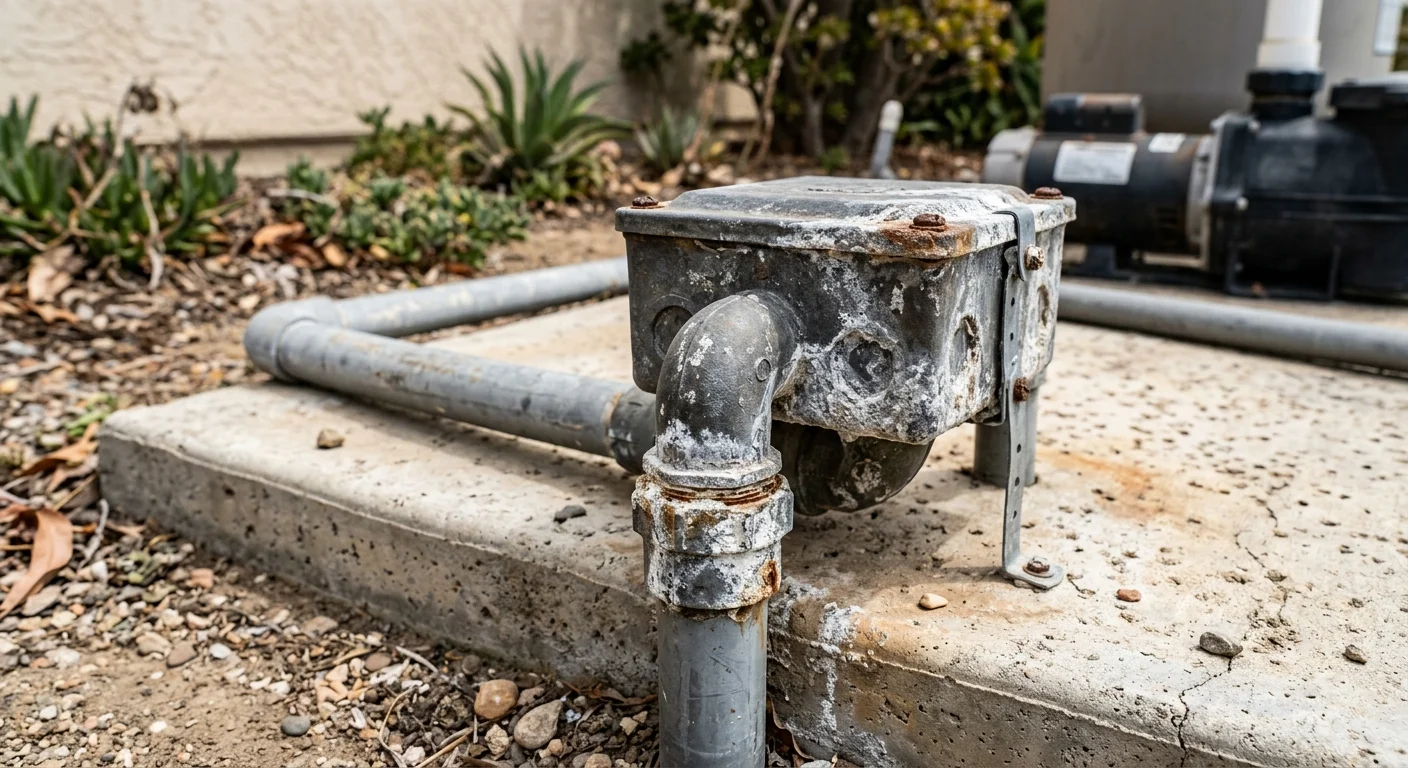
The pool light is dark, the GFCI on the pad won’t stay reset, and a metal box near the deck is crusted white. That enclosure is the pool junction box, where the wet-niche light cord meets the supply from the equipment pad. When water sits inside it, the box needs replacement, and that work belongs with a licensed specialist.
What the junction box does at the light niche
A pool junction box is the above-grade enclosure for the light circuit. On a wet-niche light, the lamp lives in a housing in the pool wall. A cord leaves that niche, travels through conduit, and lands in the box. Inside, the underwater cord is joined to the feed from the equipment pad. That splice is meant to stay dry, visible, and serviceable.
The purpose of the box is practical. It keeps the connection out of the water and out of the soil. It gives a listed place to disconnect a light without cutting plaster. On older gunite pools in Clairemont, Allied Gardens, La Mesa, and East County ranch homes, that layout is still the default. Newer nicheless LED lights still need a connection point, sometimes a smaller multi-port box on the same pad as the pump and filter.
A pool light junction box is sold as a wet-location enclosure. That’s the honest answer to whether a waterproof junction box exists. The product is built for damp and wet use. It isn’t a sealed vault for the life of the pool. The gasket, the lid screws, and the cord fittings are what keep rain and spray out. Once those fail, the box holds water.
The setback from the water is an electrical-code and inspection question. A single county-wide figure could not be confirmed from a primary source for this page. Confirm the allowed location with the building department that will inspect the work. For a City of San Diego address, that’s Development Services. Chula Vista, Oceanside, Escondido, Carlsbad, El Cajon, and Encinitas each run their own counters. A parts listing is not a permit.
If the lamp is already out, treat the box and the light as one circuit. A pool light that won’t come on is often a wet splice in that box.
Water in the conduit, corrosion, and trip-outs
Water in the conduit is the failure homeowners actually see. The lid comes off and the box is a puddle. Terminals are green or white. The GFCI on the pad trips as soon as the light circuit is on. Sometimes the breaker holds and the light still stays dark because the cord has been sitting in salt water.
On coastal pads in Pacific Beach, La Jolla, Coronado, and Imperial Beach, salt film builds on lids and screws. The crust looks like pool-deck salt. It’s corrosion on the enclosure. Inland pads in El Cajon, Santee, and Escondido bake the gasket all summer. Fall rain then finds the gap. Irrigation that overshoots a planter is enough. So is a low box on a slab that holds water after the filter backwashes.
Conduit can feed the box from below. If the run pitches the wrong way, condensate and splash inside the pipe drain into the enclosure. The box then fills even when the lid looks tight. Standing water around the pad makes that worse. The same slab that rusts pump bases will wet a junction box that sits on it.
A GFCI trip is the circuit doing its job. Moisture at the splice is a ground-fault condition. Resetting the device without drying and replacing the failed parts just waits for the next trip. Don’t bypass the GFCI. Don’t tape the lid and call it sealed.
Leave the box closed if you aren’t the specialist on site. From the deck you can still note crust on the lid, water marks on the conduit, a warm or buzzing enclosure, and whether the trip happens only when the light is on. Those notes are what the matched pro needs.
Why this is not a backyard splice job
A wet-niche light cord isn’t lamp wire. It runs underwater, through a niche, and into a listed enclosure. The splice in a wet niche junction box is part of that wet-location system. Cutting the cord short and stuffing a homemade splice into a rusty box is how lights fail and how people get hurt.
Electrical work at a pool often needs a permit. Confirm that with the building department for the city where the pool sits. California’s contractor exemption under Business and Professions Code section 7048 applies only when the aggregate contract is under $1,000, the work is casual and minor, and no building permit is required. Both the dollar cap and the no-permit condition have to hold. The $1,000 figure is the one in effect as of January 1, 2026. Splitting a job into smaller contracts to stay under that number is excluded. Anyone who advertises as a contractor loses the exemption at any price.
Unlicensed contracting is a misdemeanor under Business and Professions Code section 7028 unless an exemption applies. Look the specialist up on the CSLB license check before work starts. Splash Pool SD matches you with licensed independent pros. The brand doesn’t pull the permit, doesn’t hold the trade license, and doesn’t make the splice.
There’s no safe backyard method to publish here. If the cord is nicked, the niche is wet, or the box is full, stop. Kill power at the breaker and the GFCI. Keep people out of the water until a licensed specialist has opened the circuit and said it’s safe.
What a licensed pool pro replaces on the visit
Pool junction box replacement is a parts-and-circuit job. The specialist you get matched with (a licensed pool pro, or an electrician they coordinate) opens the enclosure with the circuit off. They look for water, burnt insulation, loose fittings, and a cord that has been pulled too short.
On a typical visit they replace the box, the cover, and the gasket. They remake the connections with listed fittings for that cord and voltage. They check the conduit entries so water can’t run back in. If the underwater cord is damaged, stained at the insulation, or too short to reach a new box, the light assembly usually comes out of the niche with it. That’s why this work sits with pool equipment service.
They test the GFCI after the new enclosure is closed. They look at the pad for the next leak path: a box sitting in a puddle, a lid under an irrigation head, a metal enclosure white with salt. Coastal replacements often need more attention at the fittings. Inland replacements often fail at heat-cracked gaskets. Same part, different weather.
Ask what they found in the conduit. Water in the pipe can refill a new box. Ask whether the light itself is staying or going. Ask whether the city wants a permit for the circuit work, and who is pulling it. The matched pro’s quote covers the condition on site. This page doesn’t publish a parts price or a labor range, because those figures were not verified for this brand or for a typical San Diego job.
How to describe the fault when you call for a match
A clear call gets a better match. You don’t need the model number. You need the symptoms and the setting.
Say whether the pool light is dark, dim, or flickering. Say whether a GFCI on the pad trips when that circuit is on, and whether it resets. Say if you can see white crust, rust, or water marks on a box near the deck or the equipment slab. Say coastal or inland. Pacific Beach salt and El Cajon heat fail the same box in different ways.
If you know the light is a wet-niche fixture in the wall, say so. If it’s a nicheless LED on the plaster, say that. If the box is on a post, on the house wall, or on the pad next to the pump, say that too. Mention standing water on the slab, irrigation hitting the lid, and whether more than one light or a spa light shares the same enclosure.
Don’t open the box to check the wires before the specialist arrives. Describe what you can see with the lid on. Note the breaker position. Note if anyone already reset the GFCI a few times. If the pad smells like burnt plastic, say that on the call.
Those details tell the matched pro whether this is a pool light junction box swap, a light-and-box job, or a pad that is wetting every enclosure on it.
When to call us
Call when the light circuit trips a GFCI, when the junction box shows crust or water marks, or when the wet-niche light is dark and the pad looks wet. That’s licensed electrical work at a pool. Call us at (858) 400-4404 and we’ll connect you with a licensed local pool specialist.
Frequently asked questions
What is a pool junction box?
It's the above-grade enclosure where the underwater light cord meets the supply from the equipment pad. On a wet-niche light, the cord leaves the wall housing, runs through conduit, and lands in that box so the splice stays out of the water and out of the dirt.
What is the purpose of a junction box?
A pool light junction box keeps the light-circuit splice dry, visible, and serviceable. It's the listed place to disconnect a wet-niche or nicheless light without cutting into plaster.
How close can a junction box be to a pool?
The setback is set by electrical code and the city that inspects the work. A single San Diego County figure could not be confirmed from a primary source for this page. Confirm the allowed location with Development Services in the City of San Diego, or with the building department in Chula Vista, Oceanside, Escondido, or the city where the pool sits.
Is there a waterproof junction box?
Pool light junction boxes are sold as wet-location enclosures. Gaskets, lid screws, and cord fittings keep rain and spray out. Once those fail, the box holds water and needs replacement by a licensed specialist.
Can I splice a pool light cord in the backyard?
Don't. A wet-niche cord and a pool junction box are part of a wet-location electrical system. Electrical work at a pool often needs a permit, so confirm with your city building department and match with a licensed pro. Look the license up on the CSLB site before work starts.
Need professional help in San Diego County?
Splash Pool SD connects you with a licensed specialist for any service in this post.