Test your pool water every week
Grab a test kit, record every reading, and stick to the kit directions carefully.
What you'll learn
- The four numbers that matter most (free chlorine, pH, alkalinity, CYA)
- Year-round target ranges for San Diego pools
- Total alkalinity works as a pH buffer, and here's why
- Stabilizer levels too high: what to do about it
Step by step
- Buy a Taylor K-2006 liquid kit or 7-in-1 test strips.
- Free chlorine: 1–3 ppm. If it drops below 1, algae can take hold.
- pH: 7.4–7.6. This keeps chlorine working well and the water comfortable.
- Total alkalinity: 80–120 ppm. It buffers against pH swings.
- Cyanuric acid: 30–50 ppm. This shields chlorine from UV.
Safety note
Readings seem fine but the water still looks off? Bring a sample to any pool store and ask for a free comprehensive test. Skip the upsell, just collect the numbers.
Prefer to let a professional take care of it?
For weekly maintenance, repairs, or urgent issues anywhere in San Diego County, leave us a message and we'll return your call.
More guides
Keep learning.
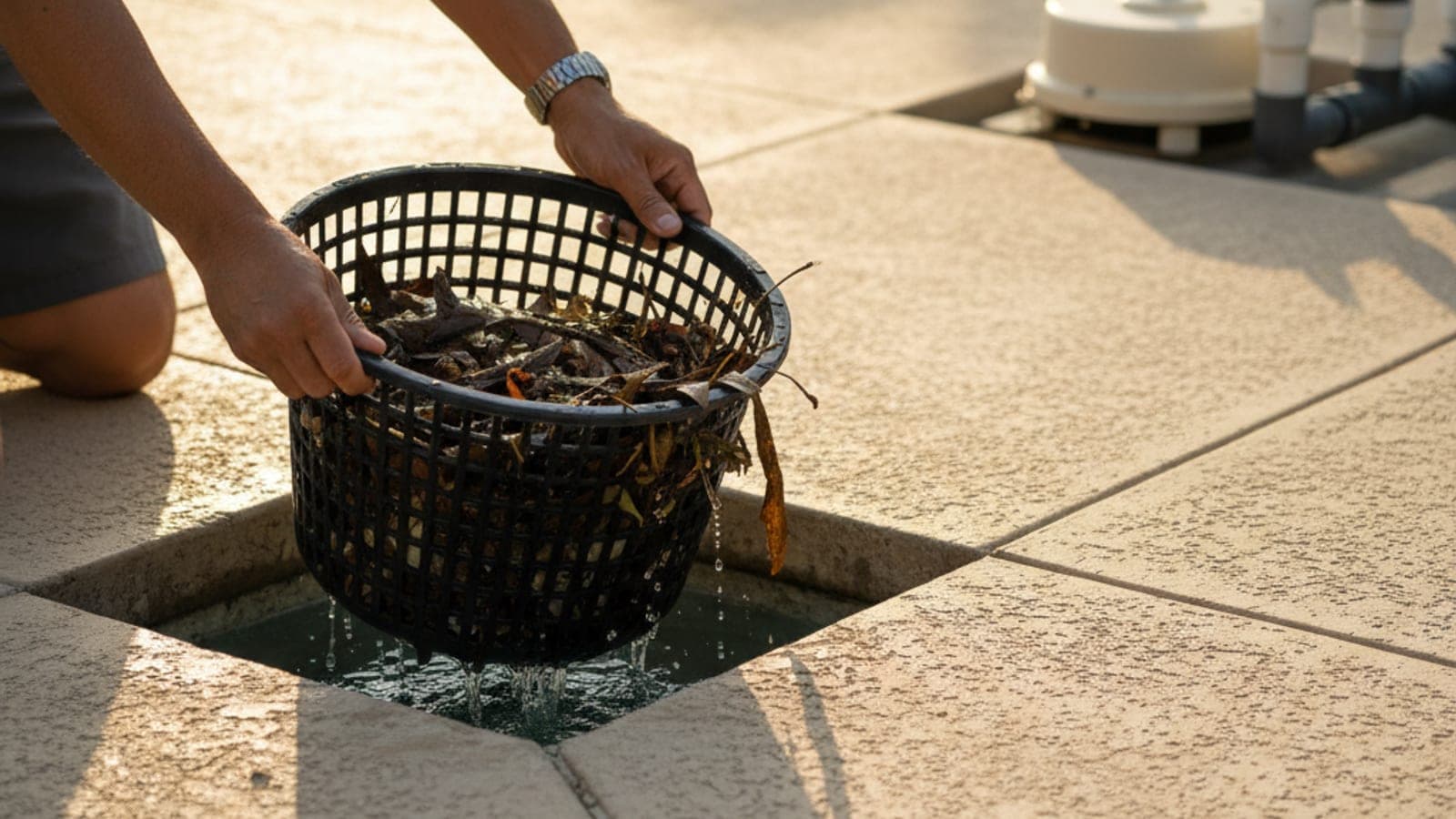
Maintenance · 3 min watch
Empty the skimmer and pump basket
A clogged skimmer basket cuts flow and forces your pump to work harder than it needs to.
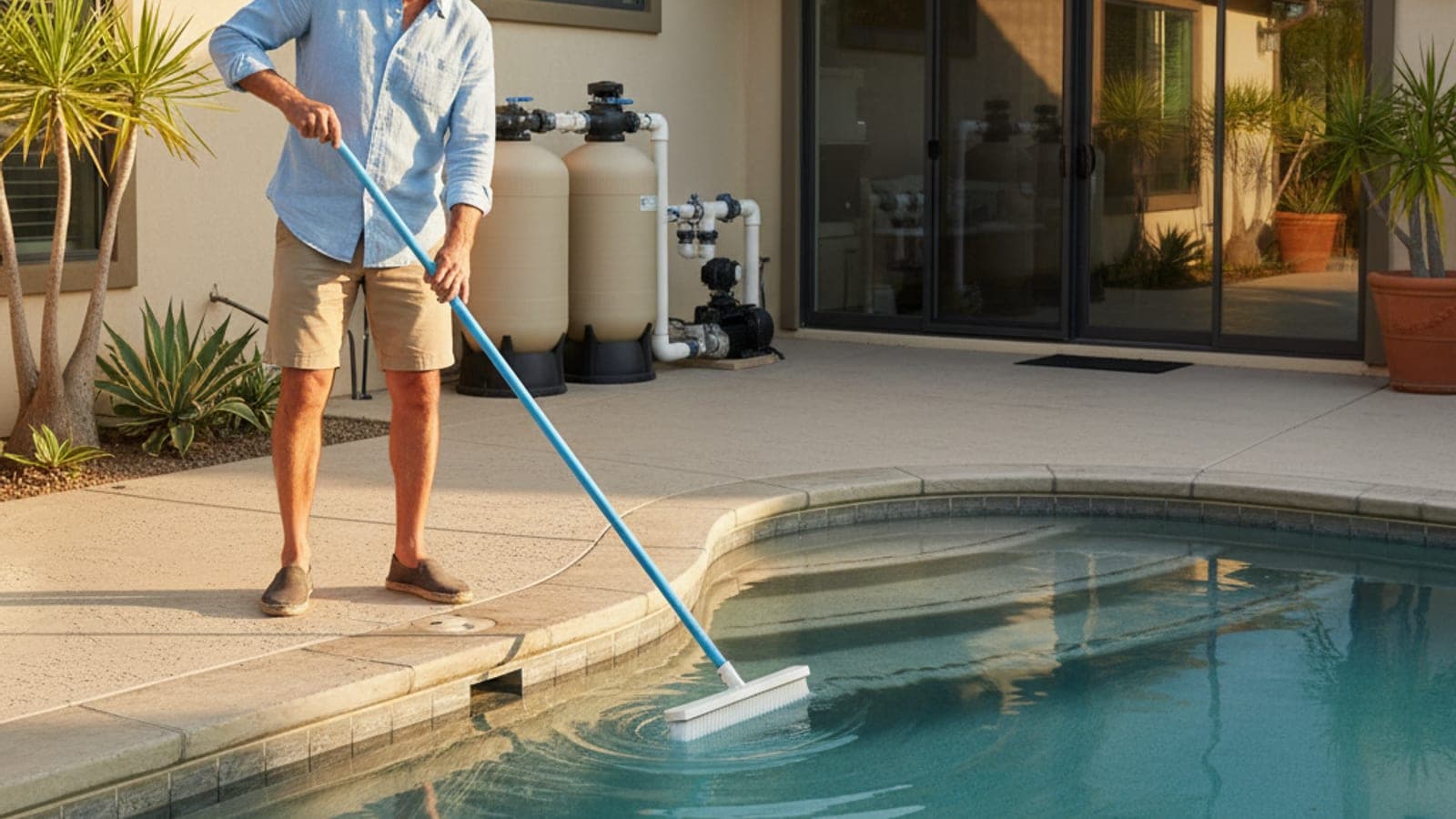
Maintenance · 6 min watch
Brush and vacuum weekly
Brushing stops algae before it appears. Vacuuming handles the corners your robot can't reach.
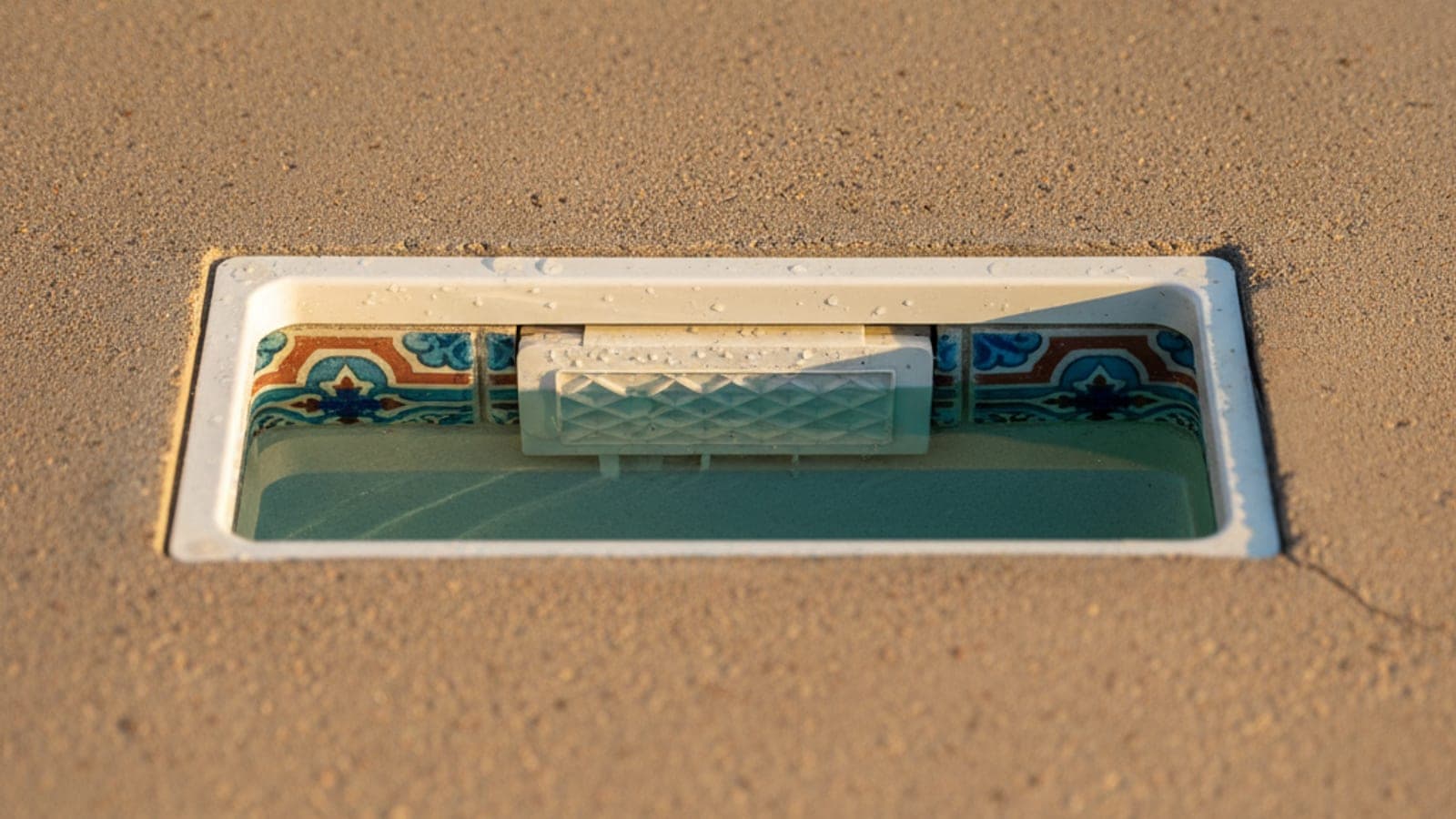
Safety · 3 min watch
Watch your water level
If the water level is off, your pool pump can burn out in under an hour. This is how to check it and keep the skimmer functioning correctly.